



It’s hot. Both Europe and the U.S. have been hit by brutal heat waves this summer. While most athletes understand that heat makes exercise harder, fewer appreciate exactly why, or what they can do about it from a nutrition and hydration standpoint.
With the summer racing season in full swing, understanding how heat affects your body and how to adjust your fueling strategy accordingly can be the difference between a strong performance and a difficult day.
Heat’s effect on athletic performance
The performance impact of heat scales with event duration. Short sprint efforts are largely unaffected and in some cases even benefit slightly from warmer temperatures. But for events lasting longer than a few minutes, things get more difficult. Marathon performance, for example, can decline by nearly 3% when temperatures rise above 25°C (77°F) compared to cooler conditions.
That gap widens for longer events and as more systems of the body become compromised.
Heat affects performance through multiple pathways:
- Cardiovascular strain increases as the body tries to pump blood both to working muscles and to the skin for cooling, compromising oxygen delivery.
- The central nervous system is affected through changes in neurotransmitter levels and temperature-sensitive receptors.
- Even motivation, perceived exertion, and thermal comfort play measurable roles.
The result is a compounding of stressors that accumulates over time, making pacing and fueling decisions increasingly difficult.
How heat impacts GI function & hydration needs
During intense exercise in the heat, blood is directed away from the gut toward working muscles and the skin, reducing splanchnic blood flow (blood supply to the digestive organs). This decrease in gut perfusion compromises the intestinal lining. Nutrient absorption becomes less efficient, and the risk of nausea, cramping, and GI distress rises substantially.
As the core body temperature rises during exertional heat stress, so does the risk of GI distress, and the hotter it gets, the greater the risk. This has real training implications: a fueling plan that works perfectly in mild conditions may fall apart in the heat, not because the fuel plan was inappropriate, but because of the physiological changes that occur while racing in a hot environment.
Heat reduces carbohydrate metabolism
Heat also changes how the body processes fuel. Under heat stress, the body draws more heavily on muscle glycogen and liver-derived glucose (sugar released by the liver) and becomes less efficient at oxidizing exogenous carbohydrates (those taken in during exercise).
A 2025 study in the Journal of Applied Physiology found that even when athletes maintained euhydration, or optimal hydration, during prolonged running in the heat, exogenous carbohydrate oxidation was roughly 20% lower compared to temperate conditions. Peak oxidation rates were also reduced.
The consequence is that the body relies more on its own finite glycogen stores, depleting them faster than it would in cooler weather.
This runs counter to what some athletes would expect. In the heat, it might seem logical to increase carbohydrate intake to compensate for the increased demand. But because the gut is compromised and the ability to process exogenous carbs is reduced, aggressive fueling strategies are more likely to cause GI distress than to improve performance.
Heat increases the risk of dehydration
Sweat rates increase substantially in the heat, and even modest dehydration can impair performance and elevate the risk of heat-related illness. Fluid needs should be guided by individual sweat rates, which vary considerably with intensity and across conditions.
How to track your fueling & hydration needs
Fuelin uses temperature, humidity, your FTP, previous Carb and Sweat Test data, and workout intensity and duration to prescribe total carb, carbs-per-hour, and fluid intake recommendations for your sessions.
Fuelin Athlete Personalized Carb and Fluid Intake Recommendations
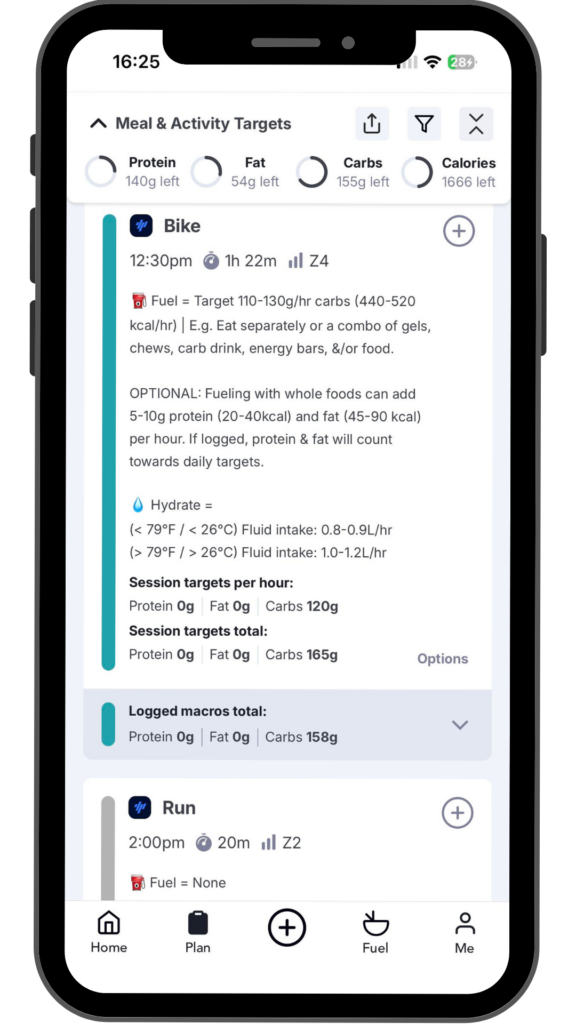
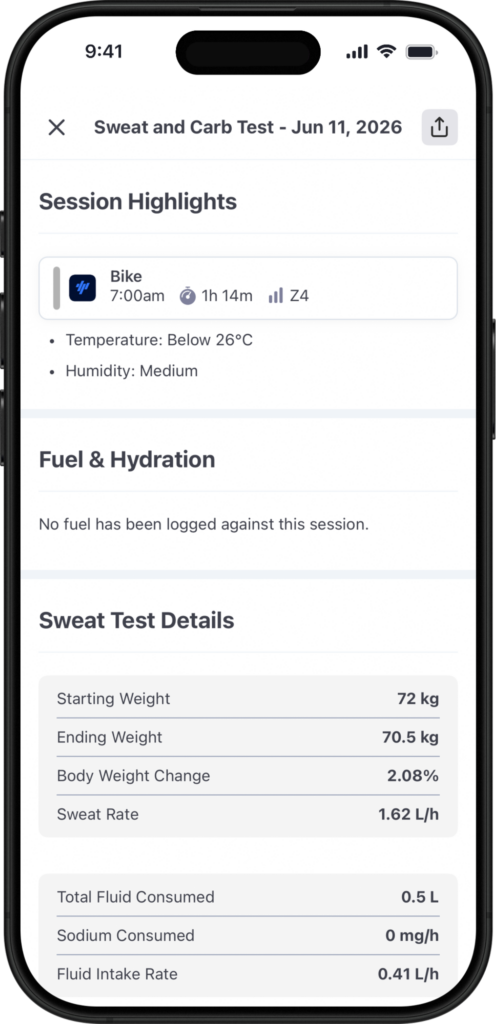
How to execute a carb & sweat rate test in Fuelin: Before heading out and after you finish eating and drinking, weigh yourself before and after your session in minimal or no clothing. Enter the details into Fuelin, and we will do the rest. The key objective and subjective elements of your carb & sweat rate tests will appear in the results.
These sweat rate tests help you understand how much fluid you lost during a training session. Fuelin expresses that loss as a percentage of body weight, then uses that data to personalize your fluid intake rate for future workout sessions. Repeated testing across different activities, training blocks, seasons, and environments enables Fuelin to build a hydration plan that evolves with your needs instead of staying stagnant to a single sweat-test data point.
Fuelin Sweat & Carb Test: Sweat Test Summary
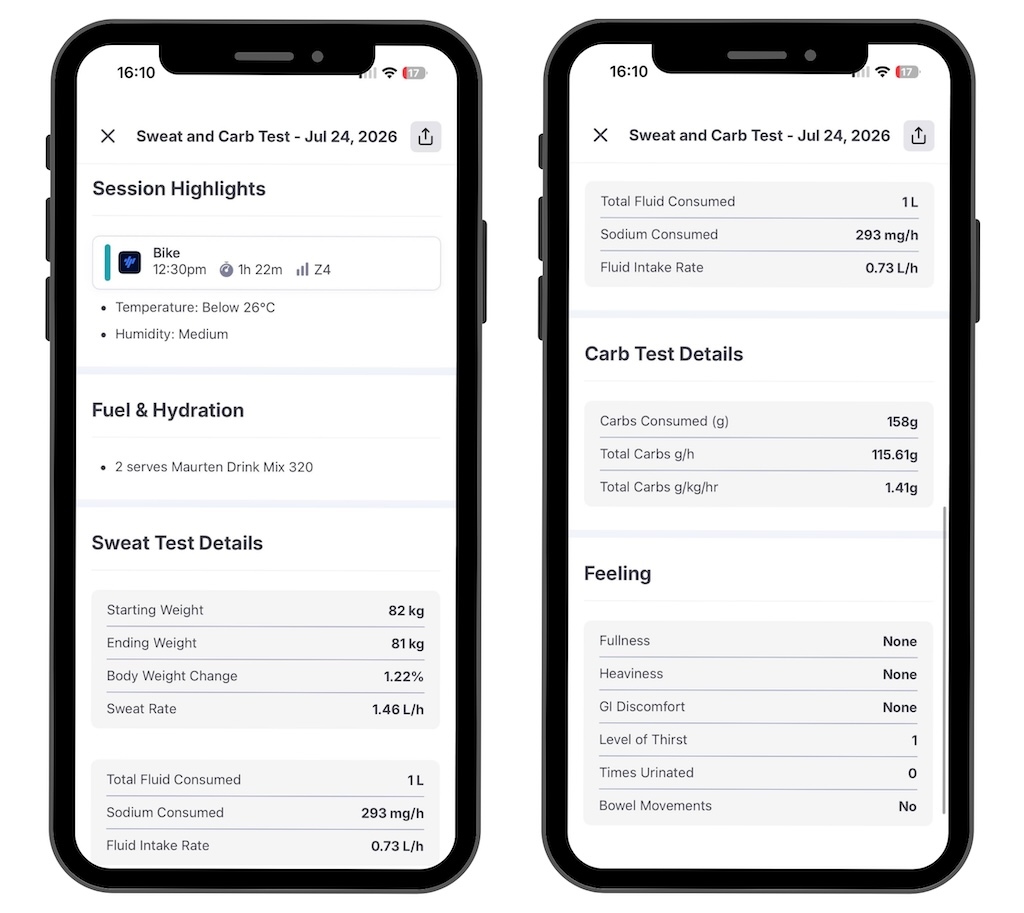
After each workout, input actual carbs and fluid consumed and how you felt during the workout (fullness, heaviness, thirst, any GI heaviness); Fuelin uses this data metrics to update your carbohydrate capacity and future carb and fluid intake recommendations, and provides a detailed summary of the ride in terms of sweat rate and carb intake.
Fuelin Sweat and Carb Test Summary
How to adjust your fueling strategy
The answer is not to simply consume more carbs, but to consume them more intelligently. Aim for smaller, more frequent feedings of around 15 to 25 grams every 15 to 20 minutes. This reduces the load on the gut at any given moment and improves the likelihood that carbs will actually be absorbed and used.
Carbohydrate source matters too. Blends of glucose and fructose outperform single-source carbohydrates because they use different intestinal transporters, allowing higher total absorption rates without saturating any one pathway.
Remember, fluid needs increase in hot conditions, so take note of this if solely relying on liquid carbs. In the above example, the athlete’s sweat rate is 1.46L/hr because the temperature is below 26°C. For the same workout in hot conditions, the athlete’s sweat rate creeps up to 1.5L/hr, which requires a higher fluid intake to achieve 80% fluid replacement.
Pro Tip → Connect your TrainingPeaks Athlete Account to your Fuelin app for personalized nutrition coaching based on your TrainingPeaks workouts, biology, and goals.
How to tweak your hydration strategy
The Fuelin app updates your fluid intake recommendations based on temperature, workout intensity, and sweat rate data.
How Temperature Impacts Your Fluid Needs
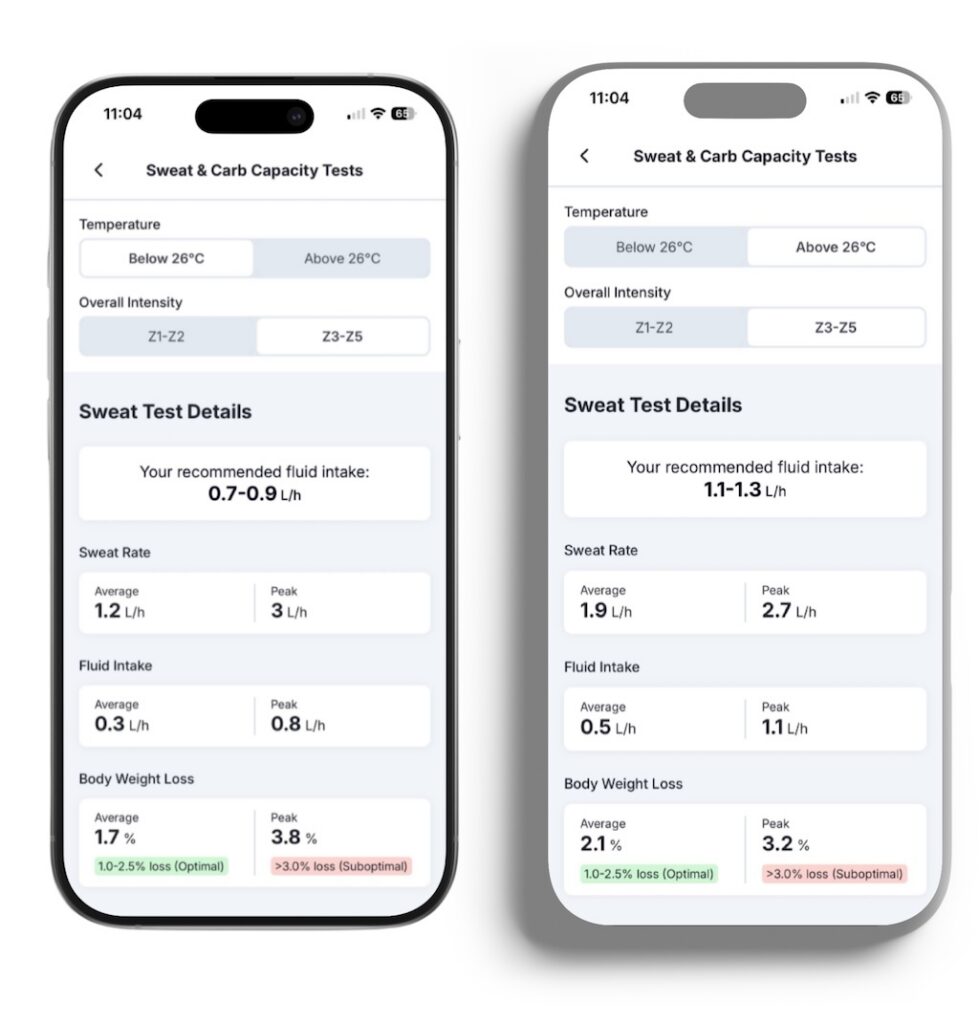
The goal is not to consume fluid at an equal rate to sweat losses during exercise, but to avoid the performance decline associated with hypohydration. There is debate over how much body weight can be lost without it impacting performance, but many athletes would do well to aim to prevent dehydration beyond roughly 2-3% of body weight. Avoid overshooting into overhydration, which carries its own risks, including hyponatremia, or low blood sodium levels.
Post exercise, you should drink back 100-150% of fluid losses. Drinking plain water is effective for replenishing sweat losses, but you may also benefit from adding some electrolyte drinks in your plan. Sodium increases thirst, which can help you drink enough if you’re struggling to fit adequate fluid in.
For most athletes in events under four hours, seasoning food to taste and using electrolyte drinks during exercise provides adequate coverage. For longer events, sweat sodium testing and a more individualized strategy may be warranted.
Cold or cool beverages may also provide a modest thermal benefit. Colder drinks lower core temperature slightly upon ingestion and may improve comfort and tolerance during prolonged heat exposure, making them worth considering during longer races or training sessions.
The carb & fluid connection
Carbohydrate absorption and fluid replacement are deeply connected, particularly during heat stress, meaning adjusting one will often impact the other. This overlap makes tracking and updating both metrics in tandem, rather than in isolation, essential for maintaining gut comfort and optimizing performance.
Pre-exercise hyperhydration
Some athletes find pre-exercise hyperhydration beneficial when they expect large fluid losses during exercise or when they are unable to drink enough to prevent hypohydration. Sodium bicarbonate (baking soda) is one option to achieve pre-exercise hyperhydration. It has extra appeal beyond fluid retention because of its buffering capacity (resistance to pH changes) during high-intensity exercise.
To effectively hyperhydrate, athletes should consume 20-25mL fluid per kg body weight with a sodium concentration of 120-130mmol/L (millimoles per liter), or 276-300mg Na/100mL fluid.
While hyperhydration may improve cycling performance in the heat, it is not yet clear if this strategy is effective for elite athletes, and it may not be beneficial in weight-bearing forms of exercise. Further research is required.
Fueling mistakes to avoid in the heat
- Taking NSAIDs before a race. NSAIDs like ibuprofen, which some athletes take prophylactically before long events, can exacerbate gut permeability and increase the risk of GI complications under heat stress.
- Consuming too much caffeine. High caffeine intake should be approached with care. Caffeine can make exercise feel easier, which may mean athletes push intensity higher (i.e. higher heat production), and individual tolerance to caffeine varies considerably in hot conditions.
- Overloading on carbs. While carbohydrate intake should not be abandoned in the heat, pushing intake above what the gut is accustomed to, particularly through high-concentration single-source products, is more likely to cause problems than to help.
Beyond nutrition
Heat training as the foundation
No nutrition strategy compensates fully for being unprepared for heat. Heat acclimatization, meaning deliberate training in hot conditions over an extended period, is the most effective intervention available. You can develop meaningful physiological adaptations, including increased plasma volume, improved sweat rate, lower resting core temperature, and reduced heart rate at a given workload. It also improves electrolyte retention, which lessens sweat sodium concentration during exercise.
If you’re racing in significantly different conditions than those you train in, you may need prolonged heat training of four weeks or longer to realize benefits.
Pro Tip → Heat acclimatization doesn’t only happen with outdoor exercise. Check out Fuelin’s Heat and Sauna Protocol, or use TrainingPeaks Virtual and CORE for safe and effective indoor heat training.
Cooling strategies
Managing heat isn’t just about nutrition. Cooling interventions before and during exercise have demonstrated a meaningful impact on performance. Mixed methods combining ice vests, cold fluid ingestion, and other modalities show substantial benefits. During exercise, packing ice scarves around your neck, holding ice in your palms, and tipping water over your head can increase thermal comfort.
Bring it together
Training and racing in the heat ask more of the body than most athletes realize. Consider the physiological cost of exercising in the heat and tackle each aspect independently.
Although hot conditions are demanding, don’t increase carb intake beyond what you’ve practiced for key events. Spread carb intake across more frequent, smaller feedings, and choose multi-transporter carbohydrate sources when aiming for higher amounts.
Remember, carb tolerance and fluid intake can be improved over time. Keep practicing, and aim to slowly increase intake towards optimal doses. Plan heat acclimatization into your final training block, and prioritize cooling strategies to stay safe during your race.
Stay safe out there. Recognize the early signs of overheating, including dizziness, confusion, or a sudden drop in performance. No matter the activity, temperature, or training load, Fuelin helps athletes perform confidently (and you can get an exclusive two-week access to Fuelin as a TrainingPeaks athlete!)
References
McCubbin, A.J. (2025, Oct 8). Sodium intake for athletes before, during and after exercise: review and recommendations. Retrieved from https://doi.org/10.1186/s44410-025-00011-9.
Mougin L. et al. (2025, Dec 1). Heat stress impairs exogenous carbohydrate oxidation during prolonged running when maintaining euhydration. Retrieved from https://pubmed.ncbi.nlm.nih.gov/41138215/.


