



As a previously coached athlete and a coach myself, the nebulous “listen to your body” mandate once perplexed me. What exactly does listening to your body mean? And does everybody listen to their body the same way? As I have trained and coached, I have gained perspective on how and when to listen to your body to help achieve your goals.
I’ve come to see that listening to your body is not just intuitive, it’s also measurable. Morning metrics like resting heart rate, heart rate variability (HRV), sleep, and overall wellbeing can offer valuable insight into how well your body is recovering and adapting to training.
This article breaks down the key metrics worth tracking, why how you feel still matters, and how to use these metrics to make better training decisions.
Why Morning Metrics Matter
Training doesn’t happen in isolation. Every workout is layered on top of sleep, life stress, nutrition, and recovery. Morning metrics help you:
- Identify fatigue before performance drops
- Reduce the risk of overtraining or illness
- Adjust workouts with more precision
- Build consistency over time
So instead of reacting to bad workouts after they happen, you can make better decisions before they start.
The Most Important Morning Metrics (And What They Tell You)
1. Resting Heart Rate (RHR)
Measured immediately upon waking, resting heart rate is one of the simplest and most reliable indicators of recovery.
- Higher than normal: fatigue, illness, dehydration, or accumulated stress
- Stable or decreasing: positive adaptation to training
What makes RHR valuable is its sensitivity to change. Even small increases, especially when paired with poor sleep or low motivation, can signal that your body is under more stress than usual.
Rather than focusing on a single number, establish your baseline and watch for meaningful deviations over time. Consistently elevated RHR is often an early sign that you may need to adjust your training.
2. Heart Rate Variability (HRV)
HRV reflects the variation in time between heartbeats and provides insight into how your body is handling stress—both from training and life outside of it.
- Higher HRV: better recovery and readiness to train
- Lower HRV: increased fatigue, stress, or incomplete recovery
Because HRV is highly individual, it’s most useful when viewed as a trend rather than a single data point. A downward trend over several days, especially when paired with other negative signals, can indicate that your body is struggling to adapt to your current training load.
When used alongside resting heart rate, sleep, and subjective feedback, HRV helps give a more complete picture of your readiness.
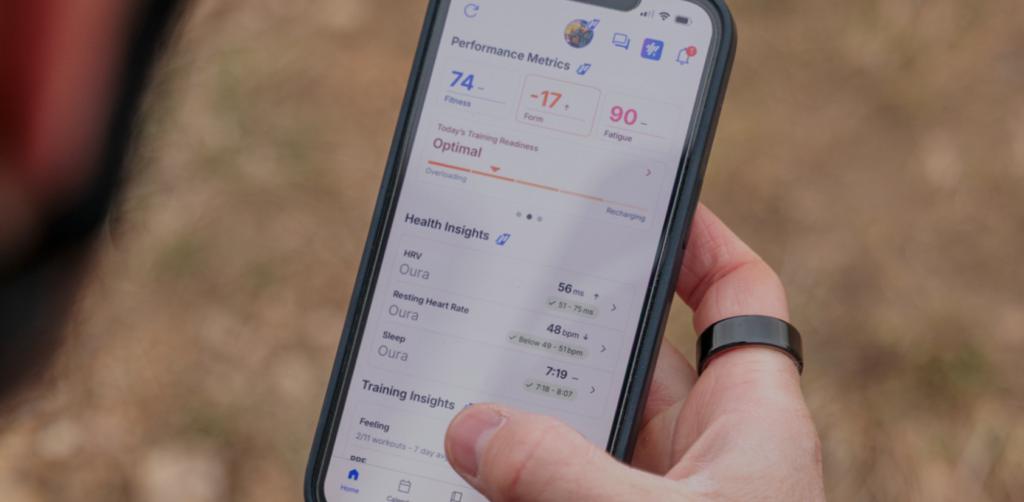
3. Sleep Quality and Duration
Sleep is where the majority of your recovery and adaptation takes place. Tracking sleep helps you understand whether you’re getting enough total sleep, how consistent your sleep schedule is, and how sleep quality impacts your performance
Short-term disruptions happen, but repeated nights of poor sleep can compound quickly and limit your ability to recover from training stress. Over time, this can lead to stagnation or increased injury risk.
Looking at sleep trends (not just one night) helps you better understand how well your body is actually recovering.
4. Mood and Motivation
Your mental state is often one of the earliest indicators of fatigue.
Low motivation, irritability, lack of focus, or a general sense of mental fatigue can signal that your body is under stress, even before it shows up in your physical performance.
For many athletes, this is an overlooked metric. But in practice, mood and motivation often align closely with physiological markers like HRV and resting heart rate. If you consistently feel unmotivated heading into workouts, it’s worth paying attention. It may be a sign that recovery is lagging behind training load.
5. Stress (Training + Life)
Training stress is only one piece of the equation. Your body doesn’t distinguish between stress from training and stress from life. Work, travel, poor sleep, and personal stress all contribute to your total load. When these factors increase, your ability to absorb training decreases, even if your training plan hasn’t changed.
Tracking stress alongside your training helps provide context for your performance and recovery. A workout that feels unusually difficult may not be about fitness. It may be about everything else you’re carrying.
6. General Feel (Fatigue)
This is your overall sense of how your body feels when you wake up. It’s subjective, but it’s powerful.
Your general sense of fatigue often integrates multiple signals, like physical soreness, mental readiness, sleep quality, and overall stress, into a single, intuitive metric.
When combined with objective data like HRV and resting heart rate, it becomes even more useful. In many cases, how you feel will confirm what your data is already suggesting. Ignoring this signal is one of the most common mistakes athletes make. Paying attention to it is one of the simplest ways to make better day-to-day training decisions.
How to Track Your Morning Metrics
The key to tracking morning metrics is consistency. Whether you’re monitoring resting heart rate, HRV, sleep, stress, or general wellbeing, the goal is to record them regularly and look for patterns over time. A single day rarely tells you much, but trends across weeks can reveal whether your body is adapting well or accumulating fatigue.
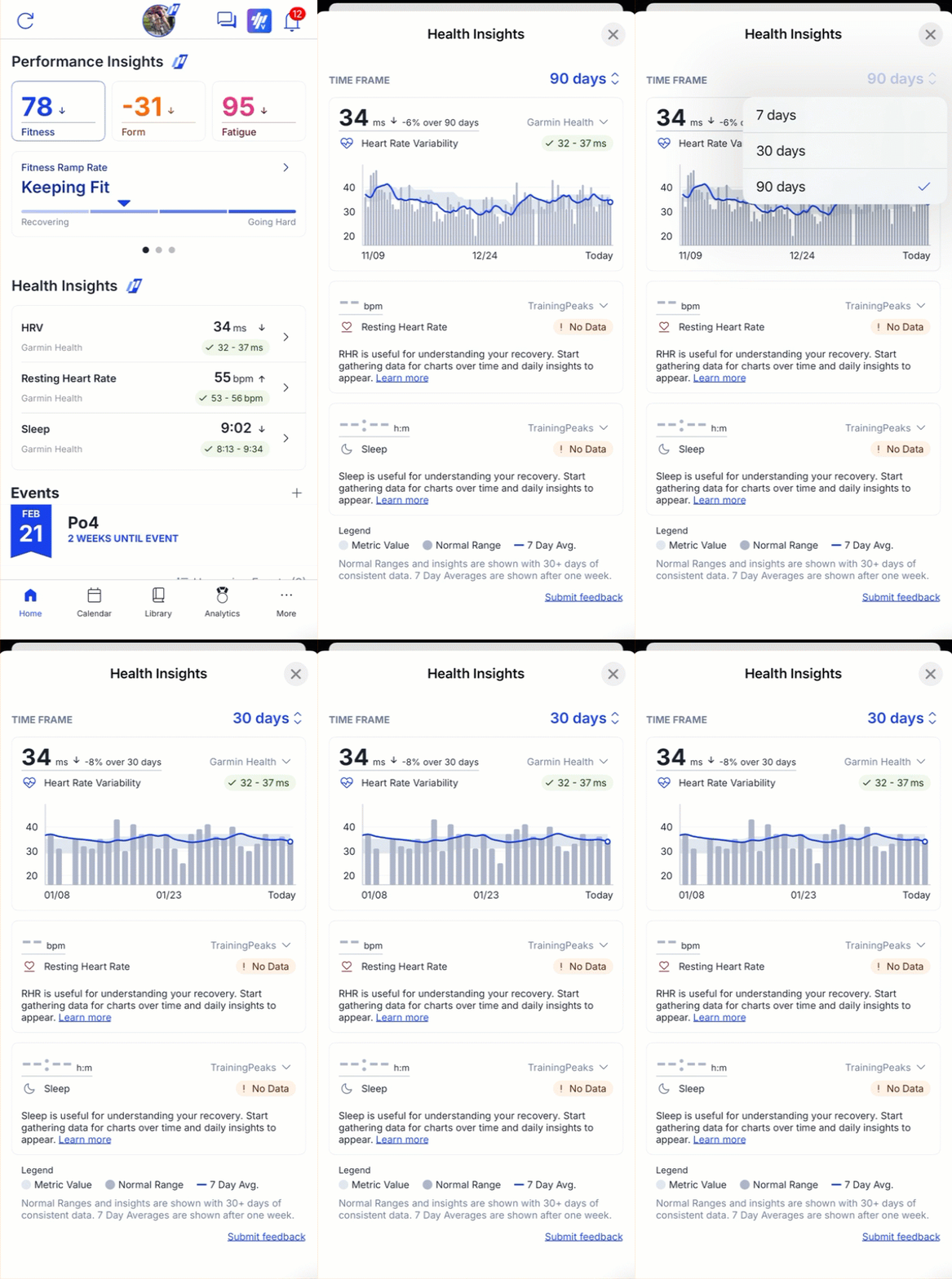
In TrainingPeaks, you log metrics like HRV, sleep, and weight directly in the app and review them over time. Health Insights makes it easier to see trends like HRV, resting heart rate, and sleep in alongside your training, helping you better understand how your body is responding.
You can also sync this data automatically from devices like the Oura Ring, WHOOP, Garmin, Apple Watch, and hundreds of others, making it easier to track consistently without manual entry.
That bigger-picture view is what makes morning metrics useful. When tracked consistently, they can help you decide whether to stay on plan, adjust a workout, or prioritize recovery.
Using Metrics to Adjust Training
Tracking morning metrics is only valuable if you use them to guide your decisions. The goal isn’t to react to every small fluctuation, it’s to identify meaningful patterns and adjust your training accordingly.
A single bad night of sleep or slightly low HRV doesn’t automatically mean you should skip a workout. But when multiple signals start to align, that’s when your morning metrics become actionable.
Look for Patterns, Not Single Data Points
Start by viewing your metrics together:
- Is your resting heart rate elevated and HRV suppressed?
- Did you sleep poorly and wake up feeling unmotivated?
- Has this been happening for multiple days in a row?
One metric on its own can be noisy. But when several indicators point in the same direction, it’s usually worth paying attention.
When Metrics Are Positive
- HRV is stable or trending upward
- Resting heart rate is at baseline
- Sleep is consistent
- You feel motivated and ready
Stay on plan or push the session if appropriate. This is when your body is primed to handle higher intensity or key workouts. If anything, these are the days where you can lean into the training and get the most out of it.
When Metrics Are Mixed
- Slightly elevated resting heart rate
- HRV slightly below baseline
- Poor sleep or higher life stress
- Mild fatigue or low motivation
Adjust the session, don’t abandon it. This might mean reducing intensity, shortening the workout, or extending recovery between intervals. Try to preserve the intent of the workout without digging a deeper hole.
When Metrics Are Negative
- Resting heart rate significantly elevated
- HRV suppressed for multiple days
- Poor sleep + high stress
- Low motivation or heavy fatigue
Prioritize recovery. You could do this in a number of ways: take a rest day, replace the workout with an easy day, and focus extra hard on sleep, fueling, and recovery. Constantly trying to “push through” on days like this often leads to injury or burnout.
“Listen to your body” is a hard concept for a lot of athletes. But when you combine objective data like resting heart rate, HRV, and sleep with subjective signals like mood, stress, and general feel, you start to build a clearer picture of what your body is actually telling you. Over time, those signals become patterns, and those patterns lead to better decisions.
The goal isn’t to train less or to overanalyze every data point. It’s to train with more awareness. To know when to push, when to adjust, and when to step back so that your hard workouts actually have the intended effect.
The athletes who improve the most aren’t the ones who execute perfectly every day. They’re the ones who stay consistent over time. Consistency comes from making smarter decisions, day after day. And morning metrics are simply a tool to help you do that.
References
Mental Health Information. 5 Things You Should Know About Stress. National Institute of Mental Health. https://www.nimh.nih.gov/health/publications/stress/index.shtml


