



When most people think about heat training, they picture cycling on desert roads under a blazing summer sun. But the truth is, a proper indoor setup can be a far more effective environment for heat training and inducing performance adaptations.
In this article, we’ll break down why indoor heat training works so well and how using tools like TrainingPeaks Virtual and CORE can help you get the job done.
What Is Heating Training?
Heat training is a structured approach where you deliberately train in hot conditions to create physiological adaptations that improve how your body handles heat stress.
Your body cools itself in two ways: by evaporating sweat and by transferring heat from the skin to the surrounding air, a process known as convection. Training in the heat teaches your body to perform under thermal stress, improving plasma volume, sweat response, cardiovascular efficiency, and overall heat resilience.

Benefits of Heat Training
Over repeated sessions, heat training improves your ability to cool yourself by triggering sweat earlier and increasing blood flow to the skin. These adaptations help your body manage heat more effectively and reduce overall thermal strain during exercise.
These adaptations can lead to:
- Lower core temperature, Heat Strain Index, and heart rate during the same workout in the same conditions
- Less sodium lost in sweat, supporting better fluid balance
- Greater comfort and lower perceived effort in the heat
- Improved power output and faster pace in hot or humid conditions
- Reduced risk of heat-related illness
Why Indoor Training Works Best for Heat Adaptation
Many people think that simply sweating during exercise is “heat training,” but the reality is that it takes significant heat stress over several sessions to induce meaningful heat adaptations. And indoor training is one of the most effective methods to do that. Here’s why:
- Controlled environment: You can precisely manage temperature, humidity, and intensity without worrying about weather or safety.
- No wind convection: The cooling effect of wind against your skin when you ride outdoors can make it difficult to produce a significant rise in heat stress, even in warmer conditions. Heat stress is a function of both core temp and skin temp.
- Year-round consistency: You don’t need to wait for summer to build heat adaptations. Athletes can maintain thermal conditioning year-round and enter the warmer months prepared for the heat.
- Safer Conditions: Indoors, you can stop, cool down, hydrate, and look at your CORE data in TrainingPeaks Virtual at any time. This is critical for avoiding heat illness while still pushing your limits. (You can learn more about heat safety here.)
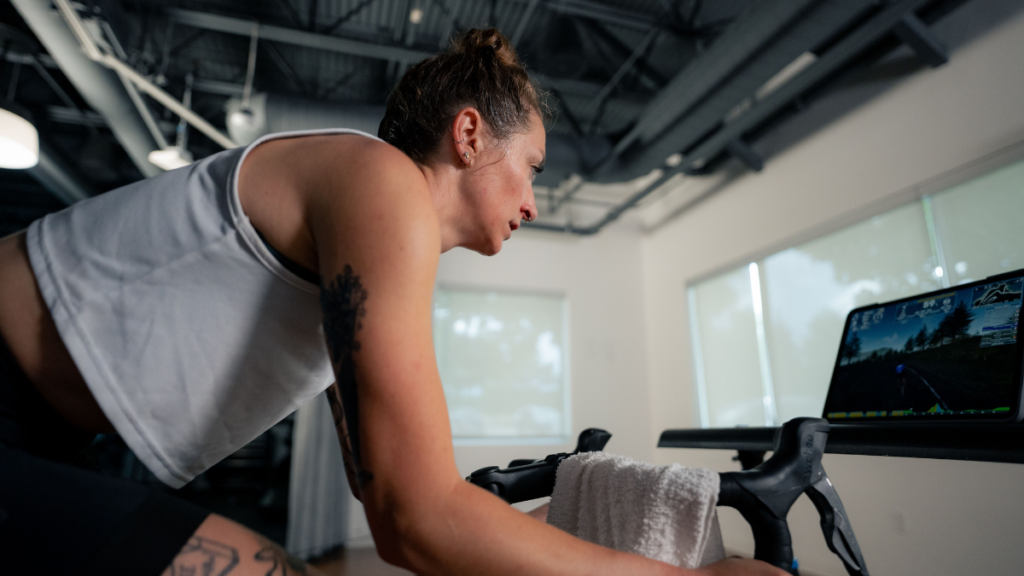
Getting Started With Indoor Heat Training
The overall goal of indoor heat training is to expose the body to enough heat stress to induce physiological adaptations across several sessions. You can do this in many ways, but most athletes choose to ride indoors on a stationary setup. And many runners choose to use the bike to layer in heat training and avoid additional mechanical stress on their legs.
To get started, you’ll need the following things:
1. A Plan
Talk with your coach to develop the right plan for you, or check out the following indoor heat training plans from the CORE team:
- Indoor Heat Training Plan for Runners
- Indoor Heat Training Plan for Cyclists
- Indoor Heat Training Plan for Triathletes
You can follow these plans directly in TrainingPeaks, where workouts are structured, trackable, and easy to execute indoors.
2. A Controlled Heat Source
Use a space heater, heated room, or indoor training area with limited airflow. Alternatively, you can wear additional layers of clothing, such as a CORE Heat Suit, thermal top, jacket, and hat. Non-permeable layers that trap heat against the body work best.
3. An Indoor Training Setup
Use a smart trainer, a stationary bike, and a tool like TrainingPeaks Virtual to complete your indoor setup. TrainingPeaks Virtual allows you to complete indoor heat sessions in a structured, controlled environment, while viewing workout and CORE data in real time. That visibility helps you manage heat stress more safely.
4. A Hydration Plan
Heat training increases sweat rate, so hydrate before, during, and after sessions.
Weigh yourself before and after sessions to monitor fluid loss and make sure you’re consuming enough electrolytes.
Because there’s no wind or wind convention, indoor training can feel exceptionally sweaty. Follow these tips to stay hydrated during indoor training.
5. A Thermal Sensor
Applying the right amount of heat to your body is crucial. Too much heat stress can overcook your body, and too little will not induce any physiological adaptations.
Use a tool such as the CORE Thermal Sensor to monitor your thermal vitals and Heat Adaptation Score across time. CORE data displays seamlessly in the TrainingPeaks Virtual HUD and records to the FIT file for post-workout analysis in Analyze 360.
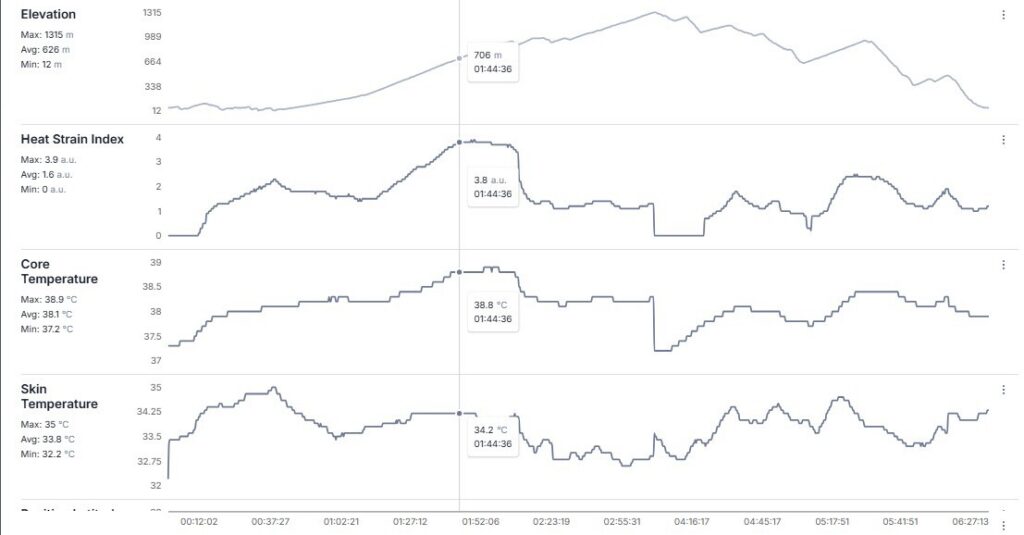
Heat training can help you stay cooler, maintain a lower heart rate, reduce perceived effort, and perform better in hot or humid conditions. But those benefits only come when the stress is applied consistently enough to drive adaptation.
Indoor training makes that possible by giving you a controlled, repeatable environment, and tools like TrainingPeaks Virtual and CORE make it easier to execute sessions safely and track your response over time.


