



Photos by Owen Crandall
On the first weekend of December in 2025, Cam Smith and Anna Gibson, two of the U.S.’s premier ski mountaineering (aka, skimo) athletes, had a battle to win. With the sport of skimo debuting in the Milano-Cortina Games in February 2026 in Italy, the duo had one last chance to cinch America’s spot in the Olympic lineup. All they had to do was beat Canada in the mixed relay to earn the single North American quota spot on home soil, at the International Ski Mountaineering Federation World Cup in Solitude, Utah. As Smith describes, it was a “do-or-die showdown”.
Smith and Gibson didn’t just defeat Canada — they won the entire race and became the first members of the official U.S. Olympic Skimo team. What is their key to victory in the budding adventure sport? As Smith described to TrainingPeaks Co-Founder and skimo enthusiast Dirk Friel in a recent podcast interview, it’s a combination of leveraging running fitness for snow-specific strength, having a stellar teammate and coach, and tracking metrics that matter.
Olympic Ski Mountaineering: Short, Sharp, and Technical
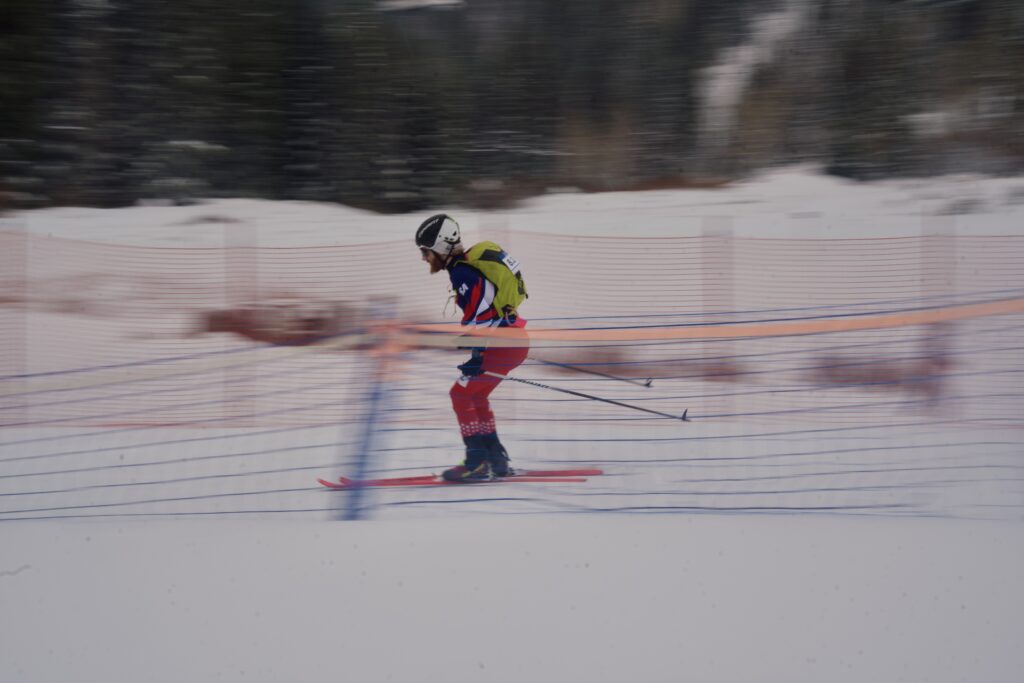
Skimo is the racing version of backcountry skiing. It combines the slog of uphill skinning with the thrill of flying downhill, which means that both endurance and speed are essential to success. As elite runners, both Smith (who has qualified for the Mountain and Trail Running World Championships) and Gibson (who won both the USA’s Mountain Running and Vertical Championships in 2025) have those boxes checked.
The 2026 Winter Olympics will include two skimo events, the mixed relay and the sprint. The sprint course typically takes about two and a half to four minutes to complete and requires several transitions, during which athletes remove or reattach their skis and/or skins (i.e., thin pieces of material that skiers attach to their skis to allow them to travel uphill without sliding backwards). In the mixed relay event, athletes complete the sprint course twice before tagging in their co-ed teammate. This sequence is then repeated, typically taking about 30-40 minutes in total.
These events are drastically different from the more traditional individual skimo races, which take about 90 minutes to complete. The short format and stop-and-go nature of the sprint and relay races mean that athletes need to excel at brief, powerful efforts, making speed and anaerobic fitness more important for these races than in longer endurance events.
Going All-In on Sprint and Mixed Relay Training
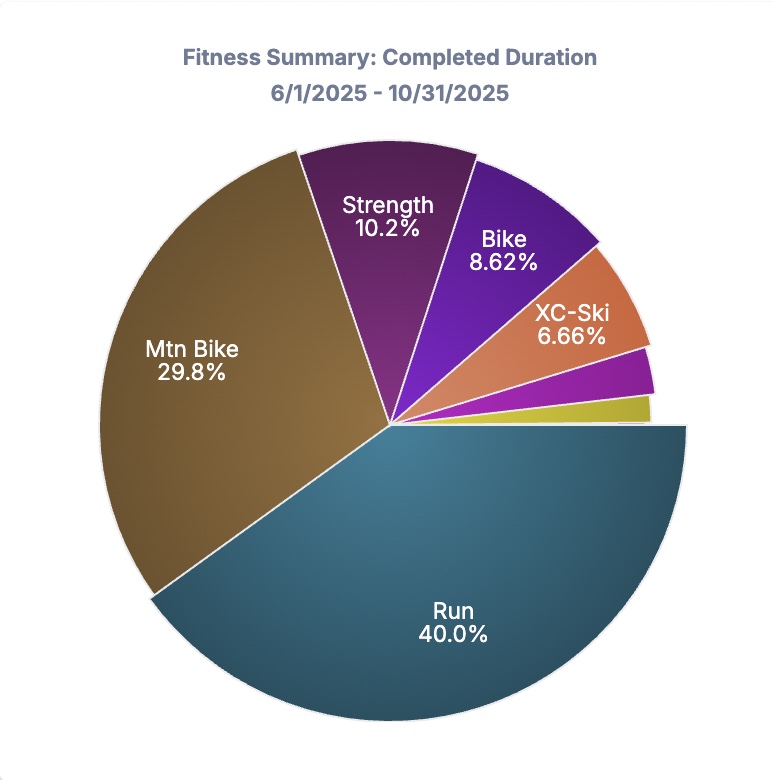
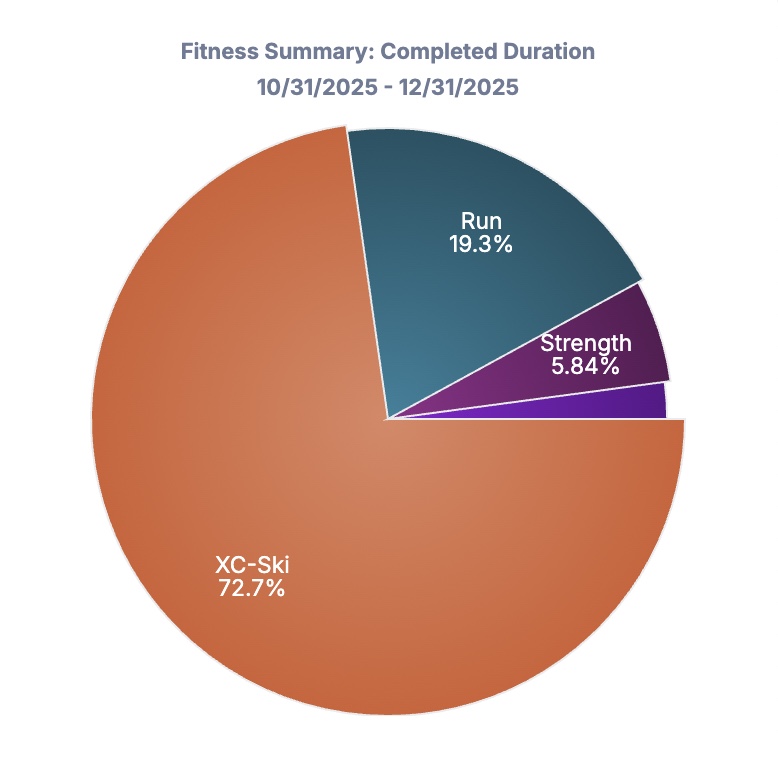
Cam had been adjusting his skimo training over the past several years to fit the sprint and relay formats, and he went all-in on this approach as he built into the Solitude World Cup. The Crested Butte-based athlete spent the summer months building his aerobic engine in preparation for the September World Trail and Mountain Running Championships, where he placed 11th in the Vertical race. He then shifted his focus to building strength, speed, and anaerobic power. This meant progressing from VO2 Max workouts to sessions that included short, hard sprints with longer rest — similar to what you might see from a runner training for an 800-meter race.
While some athletes preparing for Solitude were hitting multiple VO2 Max workouts per week in their final build, Cam included these efforts intermittently, opting for two to three sprint workouts a week instead. Athletes need a world-class aerobic capacity to succeed at these shorter races, which Cam had focused on in the late summer and fall, but they also need a high level of anaerobic power and strength, something that is not always improved by standard endurance training. While VO2 max efforts target maximal aerobic power, short sprints with long but incomplete recoveries preferentially stress anaerobic glycolysis and tolerance to metabolic fatigue, which are key limiters in skimo sprint and relay formats. Looking at the graph below, which highlights a week of Cam’s training, you can see that he was still getting in a number of hours in zones one and two each week to complement this top-end anaerobic training, which helped to keep his aerobic system strong as he moved towards Solitude.

The Workouts
To prepare for the explosive mixed relay and sprint events, Smith found a hill right outside his gym that took him about 12-14 seconds to climb. After a treadmill warmup, he’d grab his poles and ankle weights and do 10 repeats of the 14-second hill sprints every minute on the minute, with seven minutes of rest in between three sets (about the amount of rest time you get while your partner is competing in the mixed relay).

Cam also replicated these efforts on the treadmill and did his best to make sure that the workouts were terrain-specific. “I couldn’t find a single treadmill (near Crested Butte) that goes above 15%,” Smith says. “But then I found a mixed relay course from the previous winter that averaged exactly 15% without any kick turns or technical sections or boot packs in the middle. So I took that race, and then I looked at what pace the leaders were doing and the fastest times of the day on that section of the race. And then I would put my ankle weights on that weighed exactly the same as the skimo setup, put the treadmill to that same exact grade, and do intervals at that pace, more or less.”
As Smith transitioned to skimo-specific training, roller skis also became a key component of his training regimen. Smith’s roller ski setup weighed in similarly to his skimo setup (i.e., boots, bindings, skins, and skis), which meant that he could start to train his legs to handle a similar load on dryland as he would on the snow.
Transitions: The Technical Part
Anyone who watches skimo will quickly realize that transitions are a key part of these events. Each athlete does 14 transitions in a mixed relay race and three in a sprint race. These can take between four and 30 seconds, making them a crucial aspect of these competitions, which are often won or lost by a few seconds. The movements may look simple, but they’re performed at maximal effort, where fatigue blunts fine motor control and magnifies the cost of even the smallest errors.
Starting October 1st, Cam began drilling transitions every single day, with sessions lasting up to an hour. He started inside before the snow fell to get the movement patterns down, then added in variable conditions, like practicing with his eyes closed or standing on unstable surfaces. He also included some grip work and juggling to improve strength and dexterity. Once the snow arrived, Cam tailored the movements more specifically to racing, moving in and out of the transitions during training and performing them during intense interval sessions.
Muscular Strength for the Downhill
While skimo’s uphill component requires an incredible aerobic machine, the downhill requires a powerful combination of both technical skills and muscular stamina. Smith says that was one of the big focuses in the summer during his two on-snow training camps.
“We were running gates, riding chairlifts, had Alpine coaches, and were racing each other down these downhill courses in the summer and fall when we didn’t need to be so focused on what our fitness was doing as we built towards the season,” says Smith.
“It’s really critical to have the muscular capacity to handle the downhills when you’ve arrived at the top of the mountain at your max heart rate, executed that transition with fine motor skills, and then racing shoulder to shoulder with people back down. So a big part of that is having the muscle strength and power and coordination to be able to make those turns under duress,” he continues.
Smith says that he simulates a lot of that in the gym, focusing on moving slowly both eccentrically (i.e., lengthening of muscle fibers) and concentrically (i.e., shortening of muscle fibers), with a healthy dose of balance work mixed in. He says that this helps him train both his mind and his body to be ready for the downhill.
Getting Intentional Post-Injury
To almost anyone, Smith’s training program seems highly demanding. Training in the lead-up to Solitude could consist of up to four workouts in one day. But Cam says that he’s actually dialed back his volume after dealing with two consecutive years of serious injury — including a torn ACL in 2023 and a “nasty” shoulder injury in 2024. Before these, Smith was focused on volume; specifically, how much training his body could handle.
“I certainly had some success, but I was really biased towards this one concept for years and years of like, just how much can I do? And with needing to change with the injuries… then with switching focus to these shorter events, it really has forced me to be a lot more intentional with the training that I’m doing and pay a lot more attention,” says Smith.
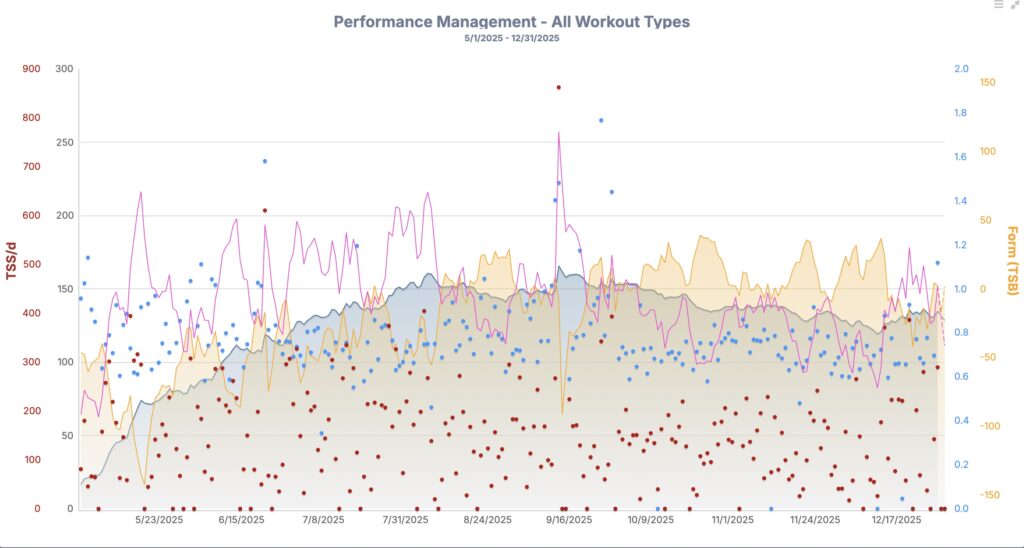
“I use TrainingPeaks to track things, see where the trends are, and just pay more attention to a lot of the details. So I’ve really appreciated this change.”
The Future of U.S. Skimo
While Smith’s intentional training could make all the difference in this year’s Milan-Cortino skimo debut, he’s just one piece of the USA’s Olympic skimo puzzle. Along his side is his “supernova of an athlete” teammate Anna Gibson based out of Jackson Hole, whom Cam helped recruit himself for the team in June 2025. He was looking for the “prototype athlete” — someone with world-class uphill running speed and an elite skiing background. Gibson had both and more. She was a 1500m Olympic trials runner, a decorated trail runner, a former Nordic Junior National champion, and showed an instinctual knack for technical transitions. It took less than six months to train her for skimo World Cup victory in Solitude.
Behind the two athletes is Coach Oscar Angeloni, an Italian skimo legend with over 20 years of experience coaching international World Cup-level ski mountaineering events. After leading powerhouse teams like Switzerland, Italy, and China, Angeloni joined USA Skimo as head coach in November 2024.
Smith says that he was anxious when he found out that Angeloni was going to coach him. His expectation was that Angeloni would be a drill sergeant on the snow, but the reality was far different.
“We started to get to know each other better, and I realized that the thing that makes Oscar, in my opinion, the best coach in the world is not being that on-snow drill sergeant. It’s just that he keeps the team so relaxed and keeps such a fun energy around the team. He keeps everyone excited to be there and manages all of our different personalities,” says Smith. “He’s just an amazing manager of people and a really, really good leader of our team.”
With Smith, Gibson, and Angeloni representing North America in the newest winter Olympic sport, it’s easy to forecast bluebird days ahead for the USA’s first Olympic skimo team.
If you’re excited to tune in to the upcoming skimo events in Milano-Cortina like we are, mark your calendars for the following races (listed in Central European Time, or GMT+1):
- Thursday, February 19
- 09:50 Women’s Sprint Heats
- 10:30 Men’s Sprint Heats
- 12:55 Women’s Sprint Semifinals
- 13:25 Men’s Sprint Semifinals
- 13:55 Women’s Sprint Final
- 14:15 Men’s Sprint Final
- Saturday, February 21
- 13:30 Mixed Relay


