



Endurance athletes spend a lot of time manipulating training intensity, volume, and density to improve performance. But what if there was a much simpler and more elemental way to give yourself a performance boost? The answer is something athletes already do all day, every day: breathe.
Breathwork may help endurance athletes improve breathing efficiency, carbon dioxide (CO2) tolerance, aerobic performance, and recovery. Techniques such as nasal breathing, cadence breathing, voluntary slow breathing, and controlled breath-holds can be incorporated into daily life, warmups, workouts, and post-training routines.
Your everyday breathing patterns impact your athletic performance.
To learn more about how breathwork affects endurance athletes, we spoke with Leo Daniel Ryan, an Oxygen Advantage® Certified Breathwork Expert and author of Breathe Free. Based in Ireland, Ryan has 20 years of experience in human health, breathwork, and performance.
While Ryan helps athletes use breathwork during performance, he said their progress begins with the way they breathe when they aren’t training.
“The more efficient you are breathing in everyday life, the better the baseline you’ll start from in training,” Ryan said. “Breathing well during the day is huge for building exercise capacity. If you’re just using the higher gears of your breathing, you’re not going to make best use of your aerobic system and will keep yourself revved up in a sympathetic stress state.”
Is mouth breathing holding you back?
Many athletes who come to Ryan have suboptimal breathing patterns. He cited frequent mouth breathing as one of the primary culprits.
Mouth breathing often encourages upper-chest breathing, which can place more demand on secondary breathing muscles. It may also contribute to a heightened stress response, elevated resting heart rate (RHR), and lower heart rate variability (HRV).
In other words, breathwork for athletes does not begin with a difficult exercise or an intense breath-hold. It starts by building more efficient breathing habits throughout the day, creating a better baseline for training and recovery.
What are the benefits of breathwork for athletes?
Breathwork is not a replacement for consistent training, recovery, or a solid training plan. However, research suggests that specific breathing practices may complement those fundamentals by improving CO2 tolerance, aerobic efficiency, perceived effort, and recovery.
Improved CO2 tolerance
One sign of inefficient breathing is a low tolerance to carbon dioxide. Although CO2 is often treated as a waste product, the body needs it to release oxygen from hemoglobin and deliver that oxygen to working tissues, a process known as the Bohr effect.
When someone is highly sensitive to rising CO2 levels, they may feel a strong urge to breathe sooner and respond by breathing more rapidly than necessary.
“There’s a psychophysiological impact of rising CO2 levels,” Ryan explained. “The brain has a fear response to it that can lead to you breathing more rapidly and not dealing well with stressful situations. You can train a higher level of CO2 tolerance, sending more oxygen to the muscles, keeping you calmer, and increasing focus because of more oxygenated blood getting to your brain.”
How to test your CO2 tolerance
The Body Oxygen Level Test, or BOLT, is a simple way to assess your functional breathing and tolerance to CO2:
- Breathe in normally through your nose.
- Exhale normally through your nose.
- Pinch your nose closed.
- Time how long it takes until you feel the first clear need to breathe.
Ryan suggests a BOLT score of 25 seconds as a practical goal for endurance athletes. The BOLT is not a comprehensive measure of health or fitness, but it can give you a repeatable benchmark for monitoring changes in your breathing.
How to improve your CO2 tolerance with breathwork
According to Ryan, one of the simplest ways to increase your BOLT score is to practice nasal-only breathing during everyday activities and low-intensity training. He recommends combining that with five to 10 minutes of intentionally calm breathing at least once per day.
Increased VO2 max
When it comes to endurance output, one of the key metrics is VO2 max, or the maximum volume of oxygen your body can utilize during intense exercise. While many athletes think about this as the ability to redline during anaerobic work, Ryan said that’s only half the story.
“There’s an aerobic component to VO2 max, and that’s what breathwork can improve,” he said.
One study found that elite swimmers who incorporated breathwork into their training for eight weeks increased their VO2 max by an average of 10.9%. Ryan also shared that one endurance client improved his VO2 max from 52 to 64 while practicing regular breath training. Although an individual result cannot predict how another athlete will respond, it illustrates the potential value of pairing breathing practice with a well-designed training plan.
How to increase your VO2 max with breathwork
Ryan recommends this daily walking breath-hold exercise as an accessible starting point:
- Breathe in through your nose.
- Exhale through your nose.
- Pinch your nose closed.
- Count the number of paces you can walk before feeling a strong need to breathe.
- Rest for one minute while breathing normally.
- Repeat four to six times.
Ryan suggests gradually working toward 100 paces per set and practicing consistently for a week before assessing how your body responds.
Better aerobic efficiency and lower perceived effort
Breathwork may also help athletes become more efficient at submaximal intensities. One way to do this is by slowing down your breathing rate.
A review of breathing strategies for runners found that slower breathing during exercise may reduce rate of perceived exertion (RPE), help regulate intensity, and encourage deeper, more efficient breaths.
“Breathing slowly through your nose can also improve heart function because it touches the diaphragm,” Ryan said. “This can lead to lower blood pressure, and I’ve seen resting heart rate decrease by around 10 beats per minute.”
Can breathwork improve your lactate threshold?
Research also suggests that lower-frequency breathing may influence fatigue. Japanese scientists who had previously associated slower breathing with improved vascular function found that cyclists using a combination of slower breathing and periodic breath-holds during four-minute intervals delayed blood lactate accumulation and reduced blood acidosis.
“Slower breathing produces less heat—which is a leading cause of weariness during training and racing—and reduces the amount of metabolites you produce,” Ryan explained.
In another study, cyclists completed three interval sessions per week for six weeks. Those who limited their breath frequency to 10 per minute increased their tidal volume (the amount of air inhaled and exhaled per breath), improving gas exchange efficiency and lowering the cardiovascular strain and oxygen costs of respiration. They also decreased their sensitivity to carbon dioxide, meaning they didn’t have to breathe as often to maintain the same submaximal output.
A narrative review of breathing strategies and athletic performance reached similar conclusions. The researchers noted that reducing breathing frequency may lower resting heart rate, improve oxygen delivery to the muscles, and increase endurance.
But the potential benefits are mental as well as physical.
“The longer you can keep your breathing rate down, the less you’ll fatigue and the calmer you’ll feel,” Ryan said. “Focusing on controlling your breathing can also have cognitive benefits.”
The researchers suggested that slow breathing may support focus and executive function while reducing pre-performance anxiety.
Improved recovery, HRV, and sleep
Voluntary slow breathing (VSB) is a portable physical practice you can access anywhere, in any situation, to change your emotional and mental state.
The above-mentioned study found that reducing breathing frequency to approximately six breaths per minute outside of training may benefit overall wellbeing. The authors noted potential improvements in autonomic nervous system function, cardiopulmonary function, stress regulation, anxiety, arousal, and resilience.
For athletes, this makes slow breathing particularly useful after training or before bed, when the goal is to transition away from a heightened stress state and toward recovery.
Breathing exercises for athletes
Different breathing exercises serve different purposes. Some are designed for everyday practice, while others are better suited to warmups, workouts, recovery, or sleep.
| Exercise | When to use it | Primary purpose |
| Nasal breathing | Daily life and easy training | Build breathing efficiency and CO2 tolerance |
| Cadence breathing | Moderate and hard running | Control breathing rate and perceived effort |
| Walking breath-holds | Warmups or separate practice | Improve CO2 tolerance and exercise readiness |
| Slow nasal breathing | After training | Support recovery and nervous system regulation |
| 4-7-8 breathing | In the evening | Encourage relaxation and sleep |
| Short breat-holds | Selected high-intensity sessions | Create controlled hypoxemic and hypercapnic stress |
Breath-hold safety: Practice breath-holds in a controlled environment and stop if you feel dizzy, faint, confused, or unusually short of breath. Never practice breath-holding in water without qualified supervision. Athletes with cardiovascular, respiratory, or other medical conditions should consult a qualified healthcare professional before beginning breath-hold training.
Nasal breathing during easy training
Nasal breathing is one of the easiest ways to begin incorporating breathwork into your routine. Start by breathing through your nose during everyday activities such as walking. Once that feels comfortable, experiment with nasal breathing during warmups and easy endurance sessions.
The goal is not to force nasal-only breathing regardless of intensity. As your effort increases, your breathing should respond to the demands of the workout. Instead, use nasal breathing at lower intensities as a tool for practicing control, developing CO2 tolerance, and noticing when your effort begins to rise.
Cadence breathing during running
During moderate- and high-intensity running, Ryan recommends cadence breathing, which involves matching your breathing rhythm to your gait.
On flat ground, begin by inhaling for two steps and exhaling for three. Once that pattern feels natural, you can experiment with inhaling for four steps and exhaling for six. On hills, a 1:2 cadence may be more practical.
It is normal to need a few mouth breaths after a hard effort. Ryan recommends following those with five nasal exhales, then gradually returning to nasal inhales and exhales as your breathing settles.
Breath-hold exercises during a warmup
Breath-holds may help prepare the cardiovascular and respiratory systems for exercise. In one study, participants completed a 10-minute cycling warmup before a cardiopulmonary exercise test. The group that performed six breath-holds during the warmup experienced the largest physiological changes. The researchers concluded that the protocol enhanced oxygen uptake, circulatory efficiency, cardiovascular function, and immediate cardiopulmonary readiness.
Ryan recommends beginning with light, easy nasal breathing and then adding breath-holds gradually:
- Jog easily at the beginning of your workout.
- Breathe in and out through your nose.
- After an exhale, hold your breath while continuing to jog.
- Stop the hold when you feel a clear need to breathe.
- Return to normal breathing before beginning the next repetition.
- Complete four to six repetitions.
- Breathe only through your nose for the next 10 minutes of easy running, if the intensity allows.
Breath-holds during high-intensity training
A 2025 review from researchers at the University of Lorraine evaluated more than 30 years of research on breath-holding. It concluded that adding four- to eight-second holds after exhalation during high-intensity training can create controlled hypoxemic and hypercapnic stress. Over time, this type of training may improve swimming performance, running economy, and repeated-sprint ability.
The researchers suggested that one possible mechanism is increased oxygen uptake in fast-twitch muscle fibers. That adaptation could be particularly valuable for endurance athletes responding to a breakaway, surging on a climb, or sprinting to the finish.
Ryan recommends spending several weeks adapting to breath-holds at low and moderate intensities before introducing them to harder training.
Once you are ready, he suggests adding this protocol to the end of a steady-state session:
- Breathe in and out through your nose.
- Exhale and pinch your nose closed.
- Run hard until you feel a clear need to breathe.
- Recover for one minute while breathing normally.
- Repeat six to 10 times.
Breath-hold work adds stress to a session. Introduce it conservatively, avoid treating it as a competition, and discontinue the exercise if your form or coordination deteriorates.
Post-workout slow breathing
After training, take calm breaths through your nose for at least five minutes while stretching or cooling down.
“Slow and light nasal breathing after your workout will aid acute recovery and downshift your nervous system into a rest state,” Ryan said.
Try to make the breaths quiet, light, and comfortable rather than taking the deepest breaths possible. The goal is to gradually reduce your breathing rate and help your body transition out of the workout.
The 4-7-8 breathing method for sleep and recovery
Ryan also recommends the 4-7-8 breathing method, popularized by Dr. Andrew Weil, as an evening practice. A 2022 study found that the protocol improved blood pressure and HRV measurements. Other research suggests that controlled breathing may also make it easier to fall asleep and reduce nighttime wakefulness.
To practice 4-7-8 breathing:
- Inhale through your nose for four seconds.
- Hold your breath for seven seconds.
- Exhale slowly through your nose for eight seconds.
- Repeat for five to 10 minutes.
If that duration feels uncomfortable, begin with fewer rounds. The rhythm and relaxed execution matter more than forcing a long session.
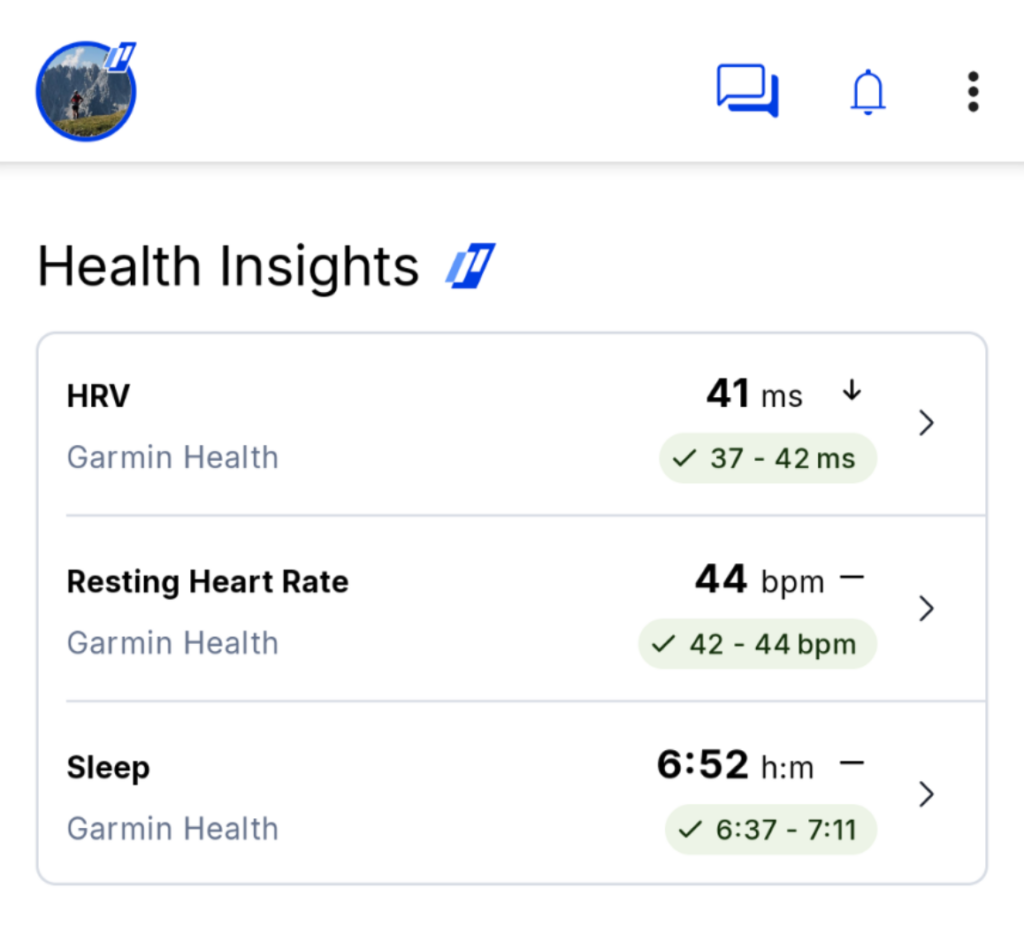
Training Tip → Try these breathing exercises and monitor how they affect your sleep, HRV, and resting heart rate. You can track your health and recovery trends using Health Insights in TrainingPeaks Athlete Home.
Can breathwork help with exercise-induced breathlessness?
Exercise-induced breathlessness, also called exercise-induced dyspnea (EID), affects an estimated 20% to 40% of runners. A review of breathing strategies in runners identified dysfunctional breathing as one common contributor.
Ryan experienced EID as part of chronic childhood asthma and eventually learned how to use breathing exercises to ease into his workouts.
“With EID, the body needs more time for the lungs to match your activity level during training,” he said. “You’ll eventually get that second wind you’re looking for, but breathwork can help you avoid that initial feeling of breathlessness.”
How to reduce breathlessness during exercise
Ryan uses the following three-step protocol with clients who experience EID:
- Extend your warmup to at least 10 to 15 minutes and breathe only through your nose when the intensity allows.
- Complete four to six repetitions of the walking breath-hold exercise.
- Add layers to your upper body in cold weather to reduce the effect chilly air may have on your breathing.
The review also suggested that diaphragmatic breathing may help reduce excessive air hunger and support more effective ventilation early in a workout.
Breathlessness can have several causes, including exercise-induced bronchoconstriction and other respiratory or cardiovascular conditions. If it is new, severe, worsening, or accompanied by chest pain, wheezing, faintness, or unusual fatigue, seek medical guidance rather than attempting to manage it with breathwork alone.
Start using breathwork in your training
Breathwork can influence athletic performance and race-day readiness, but you do not need to adopt every exercise at once. Progress gradually and give yourself time to adapt:
- Begin with slow nasal breathing during everyday activities.
- Introduce nasal breathing during warmups and low-intensity training.
- Add cadence breathing during moderate efforts.
- Practice controlled breath-holds while walking or during easy warmups.
- Add short breath-holds to selected high-intensity sessions only after several weeks of easier practice.
- Use slow nasal breathing or the 4-7-8 method to support post-workout and evening recovery.
- Monitor changes in RHR, HRV, sleep, perceived effort, and performance.
Start small, practice consistently, and assess how your body responds. Over time, you may find that breathwork helps you feel calmer, recover more effectively, and use your aerobic system more efficiently.
References
Elia, A. et al (2025, March 24). The application of breath-holding in sports: physiological effects, challenges, and future directions. Retrieved from https://pmc.ncbi.nlm.nih.gov/articles/PMC12354527/#CR108
Harbour, E. et al (2022, March 17). Breath tools: A synthesis of evidence-based breathing strategies to enhance human running. Retrieved from https://pmc.ncbi.nlm.nih.gov/articles/PMC8967998
Kapus, J. et al (2013, December 1). Adaptation of Endurance Training with a Reduced Breathing Frequency. Retrieved from https://pmc.ncbi.nlm.nih.gov/articles/PMC3873666/#ref36
McKeown, P. Nose Breathing vs Mouth Breathing: Which Is Better and Why? Retrieved from: https://oxygenadvantage.com/blogs/science/nose-breathing-vs-mouth-breathing
Migliaccio, G.M. et al (2023, May 10). Sports Performance and Breathing Rate: What Is the Connection? A Narrative Review on Breathing Strategies. Retrieved from https://www.mdpi.com/2075-4663/11/5/103
Vierra, J. et al (2022, July 13). Effects of sleep deprivation and 4‐7‐8 breathing control on heart rate variability, blood pressure, blood glucose, and endothelial function in healthy young adults. Retrieved from https://pmc.ncbi.nlm.nih.gov/articles/PMC9277512
Wang, W. et al (2024, July 23). Acute Effects of Breath-Hold Conditions on Aerobic Fitness in Elite Rugby Players. Retrieved from https://www.mdpi.com/2075-1729/14/8/917
Yamamato, Y. et al. (1988). Delayed appearance of blood lactate with reduced frequency breathing during exercise. Retrieved from https://pubmed.ncbi.nlm.nih.gov/3135187
Zoretić, D. et al. (2014, September). The effects of hypercapnic-hypoxic training program on hemoglobin concentration and maximum oxygen uptake of elite swimmers. Retrieved from https://www.researchgate.net/publication/266736536


