



Photo courtesy of Conrad Rodas
Along the windswept coastline of Hawaii’s Big Island, where volcanoes loom below a vast Pacific sky, the world’s most celebrated women triathletes will vie for the coveted title of 2025’s Ironman World Champion. With a deep pool of talent — including the likes of Laura Philipp (2024 Winner), Chelsea Sodaro (2022 Winner), and Lucy Charles-Barclay (2023 Winner) — the October 11 race is shaping up to be a nail-biter. But Sodaro’s coach, Neal Henderson, says that Sodaro is “in a very good place” for her best performance yet. And his “maximal isn’t always optimal” approach to her training might be part of the reason why.
Prioritizing Adaptation Over “Tolerance”
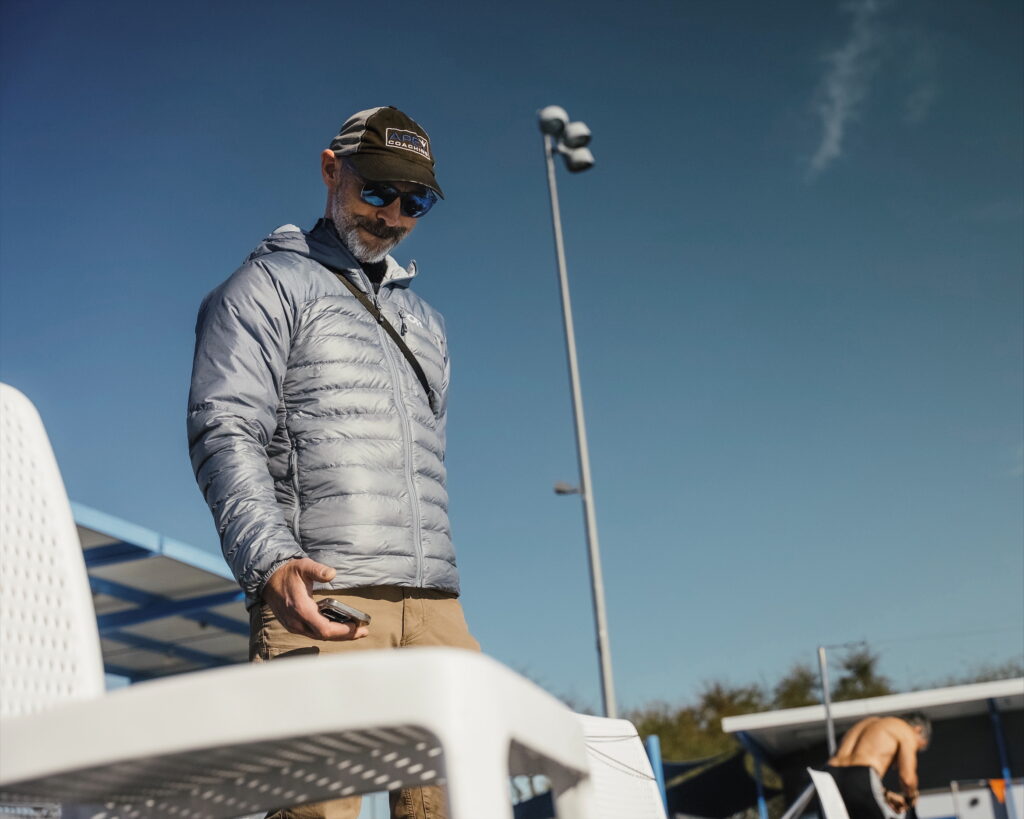
As an Elite USA Triathlon and USA Cycling certified coach who’s taken the likes of Taylor Knibb and Flora Duffy to World Championship titles, Henderson knows a thing or two about coaching the world’s best athletes. Sodaro came to him in the summer of 2024 with aspirations to reclaim her 2022 World Champion status, and Henderson accepted the challenge.
While Henderson understood what Sodaro was capable of, he didn’t know where her fitness was when he agreed to coach her. The first step was to put her through rigorous fitness testing at his performance lab in Boulder, Colorado. “Testing early is about identifying the intensity dial and getting it calibrated effectively, because you don’t want to just train where you were,” says Henderson.
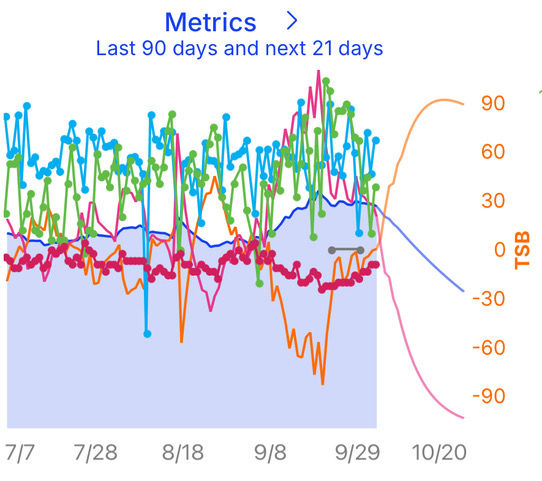
Once Sodaro’s baselines were set, Henderson set to work, structuring her training using the TrainingPeaks app to slowly progress throughout the season without pushing her to her limits. “Tolerating something to me does not mean high performance. What I look for is adaptation and improvement,” Henderson says. Prioritizing physiological adaptation over volume and tolerance is at the core of Henderson’s balanced, science-backed approach to training.
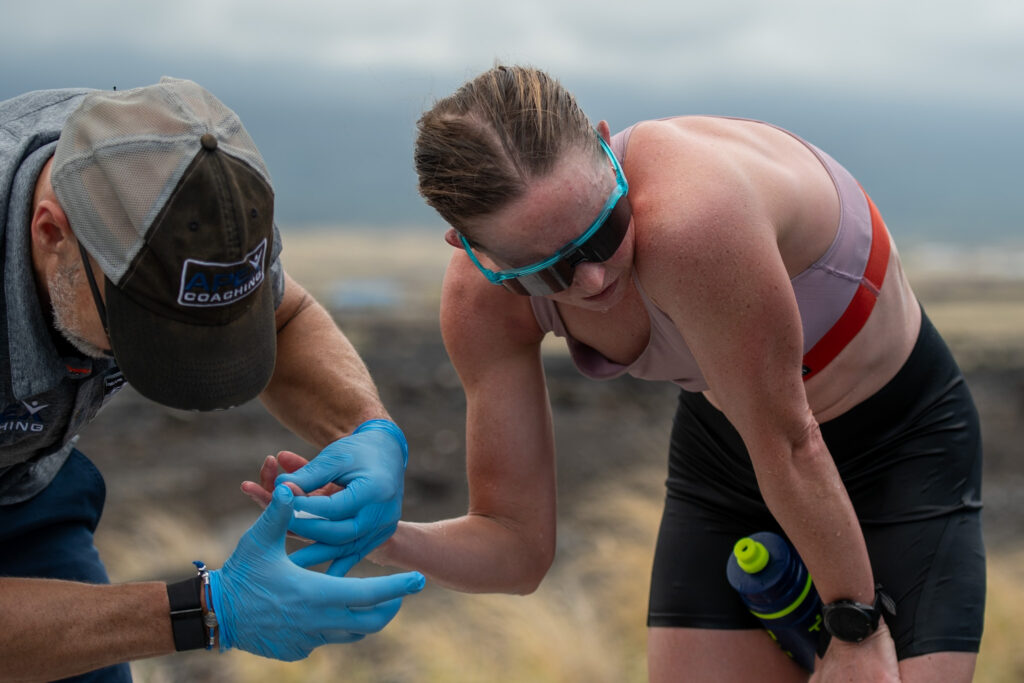
He measures this throughout the season with regular performance testing, including lactate and pace tests, to accurately program her next training block. Henderson says that just two weeks out from Kona, he was following Sodaro on a final build ride, using an e-bike to shoot ahead of her so that every one and a half kilometers, they’d stop to take a lactate sample so that he could assess where her current “breaking point” is.
“Nobody gets a benefit from having done the most hours before a start line. It’s who can perform on the day that is going to determine the outcome,” Henderson says.
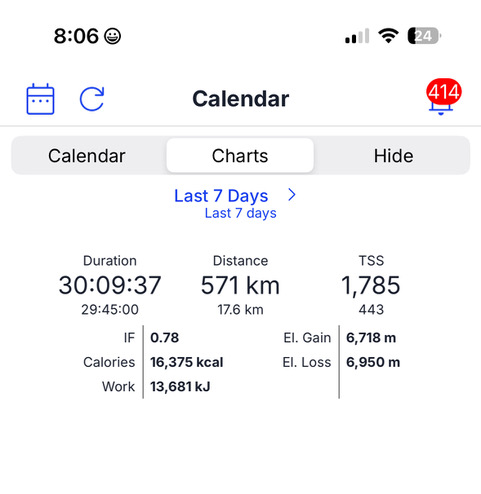
With this approach, Henderson prioritized a slow build for Sodaro, sprinkling in one high-intensity session (like micro-intervals) per sport per week, with the rest being long, steady-state efforts. Her schedule usually included:
- 6 weekly swim sessions
- 4 weekly cycling sessions
- 4-5 weekly running sessions
- 2 weekly strength sessions, at heavy weight
Henderson shares that Sodaro’s highest-volume week building up to Kona this year added up to 30 hours. “That’s absolutely massive,” says Henderson, “but we’re not doing 30-hour weeks every week or for months on end. It’s something that we build up to and then we pull back from in the taper.”
Finding Balance
Creating a thoughtful, progressive training plan is only one half of Henderson’s approach to coaching his athletes. He is also a firm believer in rest and recovery, strength training, and honoring the athlete’s personal life. Sodaro’s elite status did not exempt her from this holistic viewpoint.
“When you train, you get worse. You get slower and you are weaker at the end of a heavy session,” Henderson explains. “If you are not recovering, the work that you’re doing isn’t benefiting you. Recovery is not small stuff. It’s the balance of the work and the rest and recovery — and that’s how you get better.”
With a bout of Bronchitis before Ironman Texas, Sodaro found herself in need of such recovery. She also suffered from a calf injury mid-season — something that Henderson works on preventing with two big lifting sessions per week. “Strength training is a huge component of Chelsea’s program,” Henderson shares. “Big multi-joint movement strength training is a critical factor for staying healthy as endurance athletes… primarily for the potential to reduce injury risk. When we are doing strength training, it is not exclusively about the muscle. So much of what we do with strength training is actually about the connective tissue and having the structural integrity to be able to adapt to the higher training volumes.”
Adaptation only happens when the full athlete is present, and that entails a lot more than who they are in a kit. “Chelsea is a mother. She has a young daughter. She has a husband. She has life going on outside of the pool,” says Henderson. “When she’s running, there are times where she can concentrate and exclusively be there, but there’s also those other life demands that we have to pay attention to. My job as a coach is in knowing what’s going on and then being able to make those adjustments.”
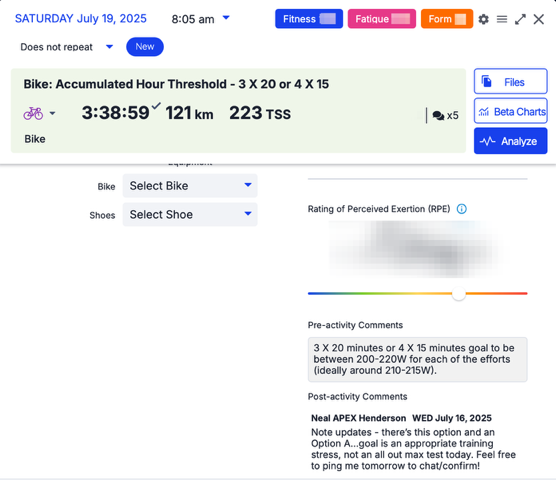
One way Henderson stays up-to-date on Sodaro is by communicating with her using the TrainingPeaks Notes feature. After each workout, Sodaro will send Henderson a note recapping how the session went for her and how she’s feeling — something that Henderson says gives “color” to training data. “Power, speed, heart rate — that’s the black and white. I can see the black and white, but I need a little bit more of the color context,” he explains.
Sodaro says that Henderson’s human-centric approach is noticeable. “Neal is an athlete-first coach,” she said in an Instagram reel in late September. “My program is very individualized and he’s taking into account all of the things that are going on in my professional and personal life so that we can really maximize the training adaptations. I think more than anything, he’s just a good person, and he cares a lot about the people that he coaches, both as an athlete and as a human. He’s very methodical, he’s super thoughtful, and ultimately, he’s a scientist who knows how to add the right stimulus at the right time for the right reason. It’s not just about optimizing and getting in as much as we possibly can all the time. It’s about doing the right things at the right time to get a great performance on race day.”
An Eye on Kona
All of that color is paying off as Sodaro heads into the biggest triathlon race of the year. Following a two-week training camp on-site in Kona, Henderson says that Sodaro is more ready for the start line than ever before.
“She did some sessions that she’s been unable to accomplish in the past, and she was able to complete those without having to sell the farm to do so,” he says. “She’s in a very good place. All the preparation pieces are there.”
The world will be watching to see if it’s enough to regain her status as the best in the world.


