



In 1960, John F. Kennedy was struggling. In the throes of a physically and emotionally difficult presidential campaign, he was facing a great unknown: the first-ever televised presidential debate against the formidable Richard Nixon. As Dwight Eisenhower’s vice president, Nixon was a policy wonk and very skilled in debates.
On top of that, Kennedy had a secret. He had known for some time that he was suffering from a chronic endocrine disease. JFK suffered from Addison’s disease, otherwise known as primary failure of the adrenal glands. This disease causes many systemic effects and is often fatal without supplementation of cortisol, which was synthesized as Prednisone in the late 1940s.
Taking it restored Kennedy’s health but left him with some of the other effects of the disease, including a suntanned appearance. This, more than anything he said in that fateful televised debate, is said to have led to his victory in the election. When compared to Nixon, who was pale and sweating, Kennedy won the day.
Adrenal insufficiency is very much a real and serious illness, but it is exceedingly rare. Since 1998, another ‘ailment’ of sorts has entered the lexicon that bears a resemblance to Addison’s disease but has a much more nebulous history and has been a source of some controversy.
What is adrenal fatigue?
Just over two decades ago, a chiropractor and naturopath first coined the term “adrenal fatigue” to identify below-optimal adrenal function resulting from stress that is different from Addison’s disease.
Per the original definition, adrenal fatigue is said to be the result of repeated stress of daily life on the adrenal glands, resulting in an imbalance in the ability of the glands to produce suitable quantities of hormones.
As many other naturopaths have taken up the diagnosis, it has spread widely across the Internet. However, conventional medicine does not yet recognize it as a distinct syndrome. In fact, a literature review published in 2016 in BMC Endocrine Disorders found “no substantiation that ‘adrenal fatigue’ is an actual medical condition.”
Symptoms of “adrenal fatigue” vs. medical diseases
Like so many other “new” diagnoses, adrenal fatigue is defined so vaguely that it can apply to almost anyone. To understand why conventional medicine doesn’t recognize it, it helps to look at how medicine distinguishes a disease from a syndrome.
Addison’s is a medical disease. It has quantifiable symptoms that can be measured to both define the illness (e.g. low blood counts and altered vital signs) and explain it (inadequate hormone secretion by the adrenal cortex). Addison’s is characterized by distinct signs like progressive anemia, low blood pressure, severe weakness, and bronze discoloration of the skin.
A syndrome, on the other hand, is a collection of signs and symptoms that are often vague and non-specific. Proponents define “adrenal fatigue” as a syndrome marked by fatigue that is not relieved by sleep, general unwellness or tiredness, or “gray” feelings.
The problem is that these criteria are broad enough that they can apply to almost anyone on any given day. Who hasn’t needed a coffee on some mornings to feel more awake? Who hasn’t felt more tired when in a period of stress affecting their sleep quality?
The reason so many people, including athletes, have come to grasp at adrenal fatigue is simple: people want an easy answer for what ails them. And this is especially true when the person providing the answer can also provide a solution.
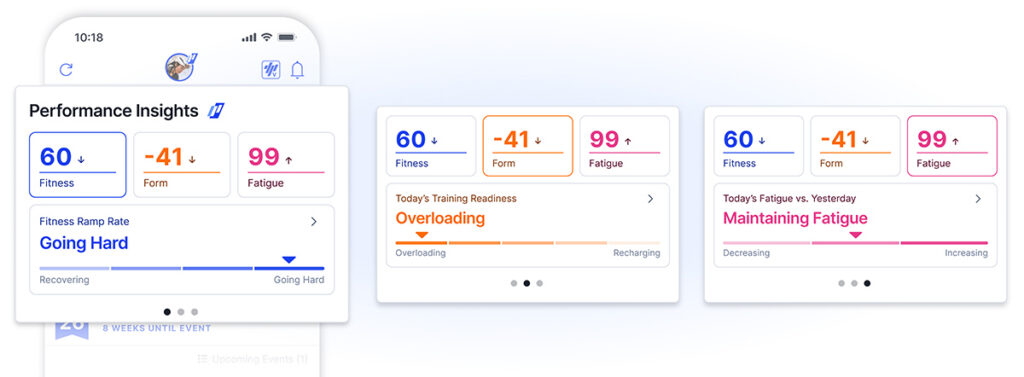
Tip → Many athletes overestimate their sleep quality. Even a slight daily deficit adds up fast, causing extreme fatigue—especially when paired with intense training blocks. Use the Performance and Recovery Insights in your TrainingPeaks Premium Athlete Home to catch blind spots like overtraining or under-recovery—or both.
How is adrenal fatigue treated?
If you go to your physician with the symptoms of adrenal fatigue, the physician is going to examine you, do some tests, and likely tell you that you are stressed. They might suggest that you modify your lifestyle to decrease that stress—perhaps by simply adopting better eating and sleeping habits.
For most patients, however, this feels like extremely unsatisfactory advice.
The latter part of this statement really explains why adrenal fatigue has become so popular. Health experts who diagnose and “treat” adrenal fatigue may do so with a concoction of (often expensive) supplements. For example, $40 will buy you a fifty-day supply of one such supplement, which contains some minerals and vitamin C—neither of which has anything to do with actual adrenal gland function. People pay a lot of money for these things because they are convinced they have a problem that doesn’t exist.
Dr. Lisa Kosmiski is an endocrinologist in Denver, Colorado, and increasingly sees patients who come to her convinced they have some kind of glandular dysfunction.
“I’ve had a couple of patients insist they had adrenal fatigue, and I felt pressured to treat them,” she says. “I did ACTH stimulation tests (tests to determine adrenal gland function) on both, and of course, they were normal.”
Dr. Kosmiski is frustrated by the growth of pseudoscience that leads patients to believe that she is somehow deceiving them. “Some individuals require a simple answer for whatever ails them and an answer that involves no work on their part, such as becoming more physically active,” she says.
“We are seeing more and more women who say their clearly normal thyroid tests are not normal for them, and more and more men who say their normal testosterone levels are not normal for them.”
She wishes that more patients would take the time to research the ‘diseases’ and, more importantly, the ‘cures’ that they are being sold.
What to do if you experience symptoms
There is no doubt that the symptoms of fatigue and stress are real. But instead of writing it off as “adrenal fatigue,” try to find out the root of the problem: Are you overtraining? Are there issues in your work or personal life that may be impacting your ability to sleep? Are you simply not eating well?
Sometimes a completely different endocrine issue is at play. Hypothyroidism, more common in women, can cause many of the same symptoms experienced with adrenal fatigue. A visit to the doctor is probably a good idea if your symptoms don’t subside.
While the idea of adrenal fatigue may make you feel better by providing an answer to your symptoms, it won’t fix you. Until you resolve the real cause of your symptoms, no pricey supplements claiming to “cure” adrenal fatigue will do much for you—other than deprive you of your hard-earned income.
References
Cedars-Sinai Staff. (2018, January 18). Debunking Adrenal Fatigue. Retrieved from https://www.cedars-sinai.org/blog/debunking-adrenal-fatigue.html
Seaborg, Eric. (2017, September). The Myth of Adrenal Fatigue. Retrieved from https://endocrinenews.endocrine.org/myth-adrenal-fatigue/
Cadegiani F. et al. (2017, September). Adrenal fatigue does not exist: a systematic review. Retrieved from https://endocrinenews.endocrine.org/myth-adrenal-fatigue/


