



When your athlete is standing on the start line after months and months of preparation, would you rather they feel like they’re tapered or peaking?
Taper is defined as diminishing something at one end, and in our world, that “something” is preparation. Athletes push themselves through arduous blocks of training, building strength in their bodies and belief in themselves, only to arrive at the taper, a word that inherently carries a negative connotation.
So much of race-day performance lives between the ears. Yet, in the final phase of preparation, we carry with us such a negative term. (Geez, way to ruin the party!)
There is no question that coaches need to reduce fatigue leading into an event to ensure peak physiological performance. That is why the original term, taper, fits so well. However, it seems the word was given to this phase of training without much consideration for the psychological state of the athlete.
Some athletes yearn for tapering, while others fear it. These reactions are largely emotional, and they can push athletes to behave in ways that are contrary to how they’ve behaved during the previous months of preparation.
In the context of TrainingPeaks, your athletes have been watching that blue line, CTL, rise and rise, only to watch it fall in the weeks before the race. It’s absolutely maddening!
Athletes Who Embrace the Taper
Take the athlete who loves the taper.
They’ve slogged it out, and they’ve been looking forward to that last session of the prep where everything starts to taper off. They enjoy the extra forty minutes of sleep before work and the quality Netflix couch time at night.
As coaches, we must note that this yearning for taper can be a slippery slope.
“It’s raining, so I’ll skip this one today. I’ve done the work.”
“I’m a bit tight, so I’ll go get that massage instead of swim.”
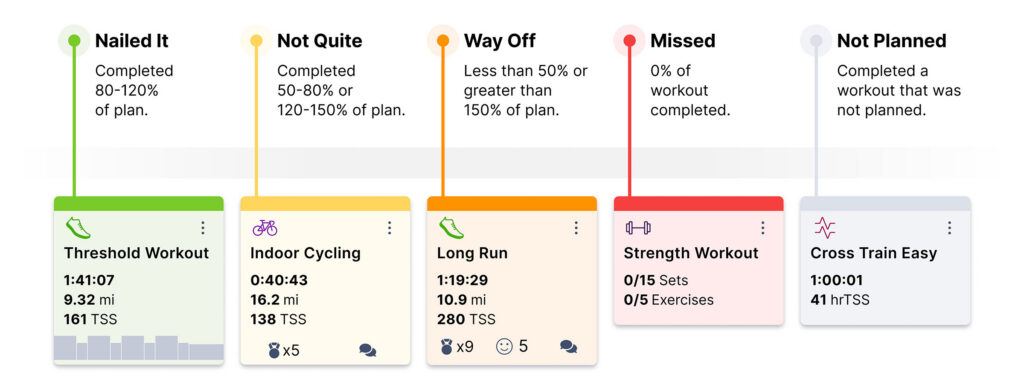
These small decisions can quickly create training disarray. And suddenly, the TrainingPeaks account of a “green machine” athlete turns into a rainbow. They essentially toss out so much hard work in just a few weeks.
If explained correctly, perhaps the athlete who yearns for taper can also yearn for the peak phase. As a result, they remain a green machine, with an emotional desire to arrive at the final peak phase summit.
In TrainingPeaks, compliance colors indicate how close a completed workout was to the planned workout. The compliance indicator tells you whether the value is based on duration, distance, or TSS, and whether it was over or under the planned value. That context matters. Because in this final phase, green still matters. The work may be reduced, but the intention should remain the same.
Athletes Who Dread the Taper
Now let’s look at the athlete who fears taper.
They’ve slogged it out, too, but they’ve been dreading the taper for a month. They feel anxious lying in bed for an extra hour in the morning or sitting in the dead time after dinner. This, too, can be a steep slippery slope.
They might decide:
“I’ll just turn the legs over for forty minutes to flush things out.”
“I feel so unfit, I’ll just throw in a few efforts to stay sharp on today’s run.”
That CTL they fought so hard to increase now falls away, along with their hopes and dreams.
Maybe, just maybe, if that final phase of preparation was called the “peaking phase,” they would no longer fear it. They, too, might remain green machines.
To Taper or To Peak?
Perhaps the taper phase is so ingrained in the language and dialogue of athletes and coaches that it’s not a battle worth fighting. But I question if it’s really best for us to simply remain complacent and let future generations struggle through as we have.
As coaches, the language we use matters. The way we explain this final phase can shape how athletes respond to it. For the athlete who wants to do less, “peaking” can reinforce focus. For the athlete who wants to do more, “peaking” can reinforce trust.
So when your athlete is standing on the start line after months and months of preparation, would you rather they feel tapered or peaking?
If your answer is the latter, then you know what to do.


