Ultrarunning is a beautiful thing. It’s a massive challenge not only from the race itself but also from the training and commitment it requires.
With so many beginners entering the world of ultrarunning, I often see or meet runners getting tripped up by things that have little to do with the neuromuscular or cardiovascular aspects of the sport. Even in the hallowed halls of TrainingPeaks, we’re seeing new ultrarunners emerge from traditional road and track running, asking questions.
After running, crewing, and being a part of this wildly fun community for the past 12+ years, there’s plenty of secret sauce that comes with the highs and lows of ultra-trail life. So here are some thoughts from the trail and aid station to help new compatriots succeed on their newfound challenges.
Minor injuries can turn into DNFs
My first ultra tip is to swing through the baby aisle the next time you’re at the store and grab a tube of A&D Ointment. A common cause of a DNF, after time cutoffs and gastrointestinal issues, is blisters, injury, and chafing. (A&D is a U.S. brand; I’m unsure what an equivalent brand in other countries would be, but it’s not basic petroleum jelly.)
A&D works so much better than the many anti-chafe or anti-blister creams and sticks you’d find in a multisport or running store. It provides a hydrophobic barrier, so when you apply it to dry skin, it will prevent moisture exposure and skin damage from friction. It has protected my feet and “delicate areas” for more than 50 miles before I reapply, for safety’s sake.
If you’re racing a course with water crossings or often battling blisters from running, A&D will make your ultra-life so much better.
Losing toenails is not a flex
One hill I will die on is that losing toenails is not a badge of honor. Losing any nail from running, unless you thought you were Lionel Messi and kicked a rock, means your shoes and insoles don’t fit properly. (Many pros get prototype shoes that look like the ones you see at your running store but fit differently.)
I’ve never lost a nail or had one turn black. Heck, my wife, who’s done several 100s, hasn’t even chipped the paint on her nails in the 15 years of ultrarunning she’s done. I’d share a set of before-and-after photos, but this isn’t a foot account.
Take the time to get shoes that fit. It won’t be easy, but it’s worth the time. Your shoes should be invisible for at least 30-40 miles.
Any little annoyance can ruin a race. Try buying from a store that offers a fit guarantee or exchanges for in-store credit so you can at least get some miles in them. So many shoes feel great in the store, and then on mile seven of a run, you feel like you need an ambulance to the podiatrist. Once you find the shoe of your ultra dreams, know the manufacturer will update it for next season, and you’ll have to start your unicorn search all over again.
Function over fashion. Running apparel must fit.
Find the perfect kit. And I mean perfect everything, from head to toe. You shouldn’t ever think about it, not even for a split second. It should meld with your inner being so much that you don’t notice it until you get back to the car and realize it needs to be thoroughly washed. Twice.
You can only pick two: cheap, light, or durable
You know how much time it takes to train up for an ultra? Now think about that volume in terms of your gear. The more you run, the more it gets abused. Don’t be surprised how quickly your stuff ends up looking a bit ragged.
Most gear will hold up for at least a couple of ultra-life seasons, but if you opt for ultralight race gear or kit, just know it probably won’t last long. A good frame of mind is the adage: Cheap, light, or durable; pick two. Once you have the right piece of gear, make sure to get an extra to rotate into your kit, and to have as a backup at a race.
Your gear should work as a system
Get into the habit of using a system to organize your pack. Some runners like to keep plain water on one side and liquid nutrition on the other in bottles, or a certain kind of food on one side and another on the other.
Think about the weather conditions and how you’ll need to access your gear. Outer layers go in first to the bottom, so you can pull things out or stash them progressively. If you have multiple pockets on the back, think of them as sections in a store, so you know what’s where for quick and easy access. Like, knowing exactly where those gloves are so you can grab them the second you start to feel a chill.
Nothing new on race day
Never try anything new at a race. Especially shoes, sports nutrition, or anything you’ve never tested. At least get out for a few miles to test out gear.
Most races share which brand of nutrition or hydration will be provided. Buy some a month or more out from the race to give anything new a go out on a medium run. If things go sideways, you can bail on the run and save yourself the torture. That way, you know if you can rely on the aid station-provided supplies or if you’ll need to fill up drop bags with the goods that get you to the finish.
Wanted: Experienced crew
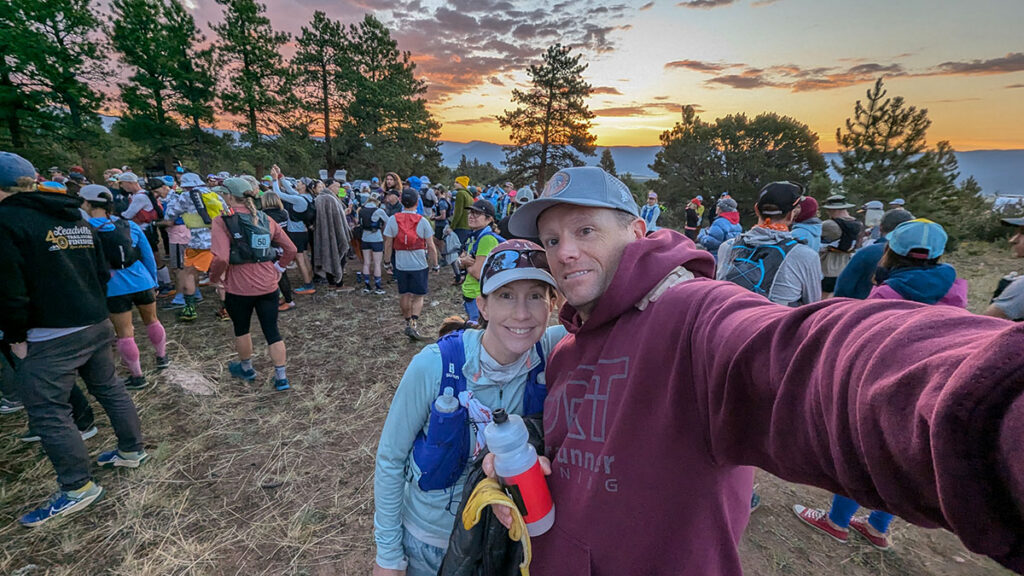
Do yourself a favor and get at least one person with experience crewing an ultra. I’m sure your friends are super pumped to help out and cheer you on, despite their talk behind your back about how they think you’re nuts.
Ideally, get someone with experience who can recognize when something is going sideways and catch it early, or at the very least, understand how to approach the next section of the race given the situation. It’ll save you a ton of mental energy to focus on running well instead of giving instructions on what’s needed from your drop bag and where to put it in your pack.
And if you don’t have any friends who’ve ever done an ultra before, show them this: How to Crew Ultra Runners: A Complete Guide for Crew Members.
Mental currency is worth more than gold.
Strange things happen at ultras, so be ready. Your crew should have an extra set of things you can’t finish without in a bag or tote box at the ready. Especially when you have to carry the required gear for a race. In a pinch, I’m sure your crew will find someone in the aid station to borrow a required piece so you can go back out on course, but being ready for that moment saves mental currency, which is worth more than gold during a race. If you don’t have backups for everything, hit up your crew chief since they’re helping you and not racing.
If you get cold overnight, despite wearing all of your required gear and layers, ask an aid station volunteer or your crew for hot water in an empty bottle, then put it in your running vest or shirt. Make sure it’s not too hot, though. It’ll be hard to tell when you’re freezing.
Don’t get overconsumed by your watch
Set up an activity profile on your watch just for races. That way, you have a limited number of metrics to view. If there’s too many, you could get consumed by numbers and spiral. Key metrics I like to use are lap duration, lap pace, and lap distance. These give you a sense of where you’re at between each aid station.
Also, I like to build a pace chart that I carry in my pack with estimates between aid stations. I recommend focusing on one chunk at a time. One chunk might be great, and another might be bad, but once you’re through to the next segment, it’s a new game. You can have a total time, total distance, and total elevation gain to know where you are in the race overall, but only check that at aid stations or let your crew tell you the bigger-picture stuff so you don’t fall down a sad panda hole on-course. Only be a trash panda eating snacks. That reminds me – always be eating!!
Another smartwatch tool to consider using is alerts for food and/or water nudges. Many watches can trigger an alert based on time or calories. If you tend to forget to drink or eat when digging deep, these can help keep you on your nutrition plan. Sure, the calories burned on your watch may not be totally accurate, but it’s a good one to have, so you know what’s different from a timer or a distance alert.
Finish line surprises & prizes
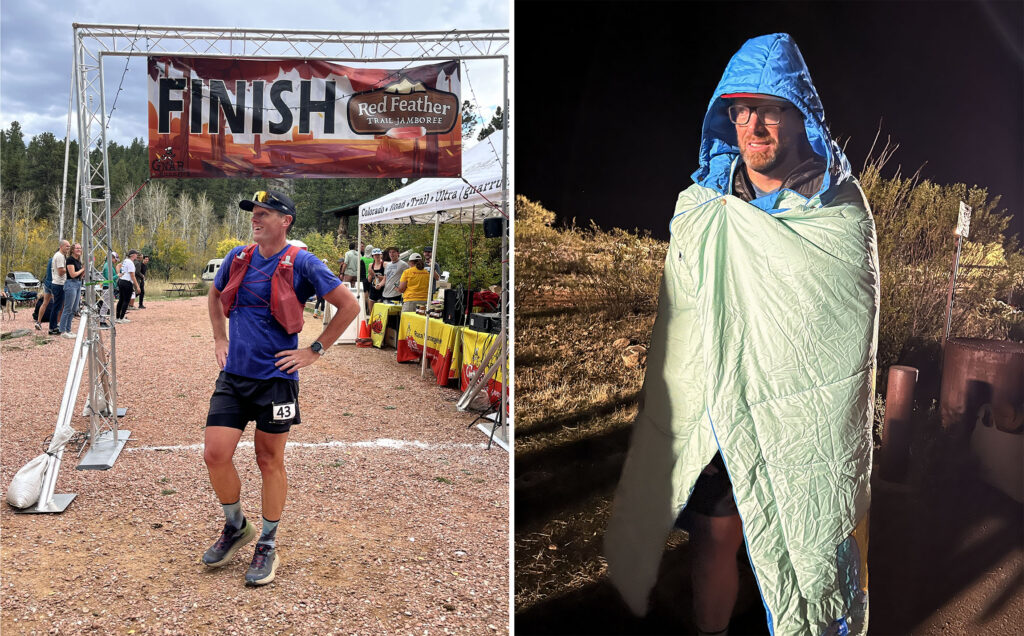
If you’re going to finish later in the day or into the night, have blankets plus a change of clothes in your finish bag. You’ll feel fine (or even like a million bucks) when you get handed that buckle, and then the shivering and chills start to take over your body as your crew starts talking about which pizzeria or brewery to overrun. And yes, you get to give them all gas money and buy dinner for helping you achieve your goal.
There are a truckload of other tips and tricks to keep in mind when taking on your first few ultras, but, much like an ultra, you’ll settle in and find what works for you and your goals out on the trail.
The ultrarunning community is one of the most welcoming and helpful sports groups around. Lean into it and make yourself at home. And lastly, keep that mindset focused on what you can control, and roll with the waves of challenges you get to take on out there. Because that’s why we do it. To find out who we are and what we’re really capable of doing.