



Let’s start with a little honesty: as a coach, most business planning and financial advice on the internet is not written for you.
Many running, cycling, and triathlon coaches are building solopreneur businesses with no intention of hiring employees, adding inventory, or selling their business. Your main goal is to support your athletes well while maintaining a manageable schedule that also allows you to pay yourself.
Most financial advice is for larger corporations with much greater complexity. Through my experience working with coaches, small businesses, and other solopreneurs, I’ve noticed the main differences between businesses that thrive and those that struggle. Implementing these into your business plan will help you build a financially healthy, sustainable coaching practice for years to come.
1. Establish a simple, consistent invoicing process.
In an ideal world, a monthly recurring payment is automatically set up when you onboard an athlete. I cannot overstate the importance of using a single, simple invoicing process.
Every time I start working with a coach who allows clients to pay via various methods (Venmo, PayPal, check, etc), we discover old invoices that were never paid. This is a very understandable problem; the best laid plans to follow up with clients about payment often get derailed by the actual work of coaching. Automate invoicing in the background and get paid on time!
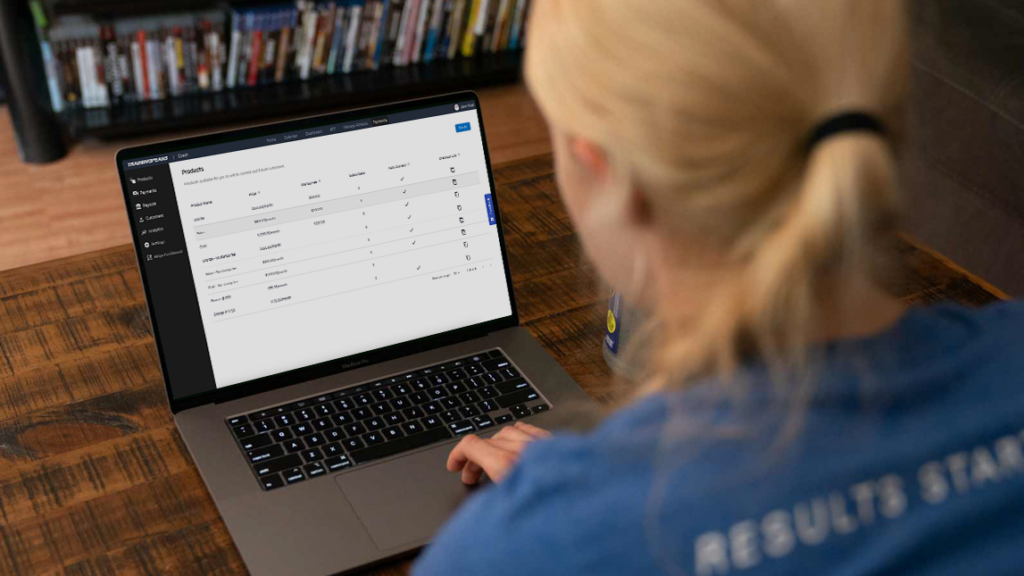
Many platforms offer automated billing, but TrainingPeaks coaches have access to TrainingPeaks Payments, which lets you set up recurring athlete billing in the same place you deliver training plans. One of the best ways to stay on top of admin is to keep your tech stack simple and use as few platforms as possible. That cuts expenses, improves efficiency, and frees up more time and mental energy for coaching.
TrainingPeaks Payments also lets you add Startup Fees to the first invoice. If you’re doing many hours of prep work for new athletes, you can add a Startup Fee to their first month of billing to charge for that. Just make sure you communicate that to the athlete ahead of time!
2. Regularly review income and expenses.
How often do you spend time reviewing your business performance against your goals for the year? Block off an hour once a month or quarter to ask yourself these two questions, and keep notes on your answers. It’s a small thing, but trust me, it will help you significantly. In my experience working with coaches who start to do this, the light bulb really comes on when they implement this habit of taking regular notes about how the last month went. Reviewing the past is how we grow into planning for the future.
1. What was my expected vs. actual income last month?
Reviewing your monthly income against your goals is essential. A tough day can make it feel like athletes are not responding or that one cancellation defines the whole month, but the numbers often tell a fuller story. For example, maybe just three weeks ago, you signed a new athlete. Looking back at the bigger picture can help you stay grounded and remember the wins!
Also, taking time to review your income ensures you have access to all your bank accounts. One coach I worked with didn’t realize he had lost access to a bank account that received client payments for a portion of his business. After we discovered that, he regained access to thousands of dollars!
It sounds like a simple step to confirm you know where all your money is being deposited, but the basic (and boring) habits are often the most effective.
2. What did I spend money on last month?
The most common categories I see coaches spend money on unnecessarily are:
Software and subscriptions: Cancel the apps and annual subscriptions you forgot about and no longer need. Consider subscriptions you could cancel because another service you pay for can do the same thing.
Continuing Education: CEUs are necessary and important, but ambitiously buying too many at once means money has been spent, and now you’re feeling guilty for not completing several at a time.
Travel, Client Gifts, and Meals: These are categories most often spent “on the go.” None of these are bad; they’re just easy to get out of control without regular review.
Set Up a Business Bank Account
At this point in the conversation around income and expense review, I often get asked: What is the best way to track income and expenses? The MOST important first step is setting up a bank account used exclusively for your business.
If you don’t need to separate personal and business transactions, it’s much easier to review and prepare for tax return filing.
Choose a System to Track Your Finances
Some coaches want to use accounting software (I use QuickBooks Online) from the start of opening their business. Others prefer to keep track in a spreadsheet for a while before upgrading to accounting software as their business grows.
Both are good options. There is nothing wrong with spreadsheet bookkeeping! If you do want to do spreadsheet bookkeeping, create one tab to track all your income, one for all your expenses, and record your transactions in each tab once a month (using the above review framework).
Many coaches start to feel they are outgrowing spreadsheet-based bookkeeping by the time they have 25-30 transactions per month.
When the admin time of entering transactions into a spreadsheet becomes overly burdensome, it’s time to upgrade to accounting software that lets you automate some of the busy work.
3. Simplify a tax savings plan.
Now that you have a better handle on your monthly income and expenses, it’s time to talk tax planning.
If you are a brand-new business and have no idea what to save for taxes, start by saving roughly 20-30% of all customer payments for taxes. If that ends up being more than you need for taxes, you can use that savings as a general cash buffer for unexpected expenses, loss of income, needing to take time off, etc. Cash will buffer against the uncertainties in business (and life), and you won’t regret developing the saving muscle right out of the gates in your business.
If you have an established business, you can work with a tax pro and ask them what your quarterly estimated payments to the IRS should be. This amount will be specific to you, your business finances, and other factors such as a spouse’s earnings, dependents, and other income sources.
Once you know how much you need to pay in quarterly estimated tax payments, I recommend setting up a dedicated checking or savings account for taxes. Each month when you get paid, transfer your expected tax amount to that savings account.
You won’t be surprised by a bill at tax time, you won’t accidentally spend money on general expenses that you meant to save for taxes, and you’ll know how much you can actually pay yourself.
A bank I love for automating this is Relay Bank**. They allow you to easily setup multiple bank accounts and set up automatic transfers between accounts. So let’s say you need to save 20% of your income for taxes and your clients pay on the first of the month. You can set up a rule to transfer 20% of that income to your tax savings account on the fifth of every month. Then you never even have to think about it.
**This is an affiliate link. I only ever recommend products I use personally and love.
So far we’ve been talking about saving for self-employment income taxes, but there are many kinds of taxes! Depending on the state or country you live in, you may be required to collect and remit sales tax.
If you use TrainingPeaks Payments to invoice your clients, TrainingPeaks is the Merchant of Record and handles all the appropriate sales tax collection and remittance for you. That’s a huge benefit that can save you admin time and potential errors that could otherwise be both a surprise and costly.
4. Pay yourself consistently.
This is where the rubber meets the road. This is the difference between a successful coach and a successful coaching business: happy and successful athletes, doing work you love, working a schedule you love, AND paying yourself consistently well.
If you are getting paid by your clients up front, reviewing your income and expenses regularly, and saving for taxes, you’re ready to pay yourself like a business owner.
With these habits, you know what your monthly income and operating expenses are, and how much you need to save for taxes. As for the rest? You get to decide!
Do you want to keep some in your business for additional savings and cash buffer? Do you have enough cash buffer and want to pay yourself the rest each month? Do you want to pay yourself a set amount each month with “bonuses” a couple of times a year when you exceed your goals? That’s all up to you.
To sustain a long-term coaching career, you’ll need these financial habits to anchor you and keep the dream of the business alive. I hope this guide has been helpful, and I’d be glad to connect if you have questions or want additional guidance.


